Can a Screw Jack be Used for Long – Distance Lifting? Screw Jack

As a supplier of screw jacks, I often encounter inquiries from customers about the capabilities and limitations of our products. One question that comes up frequently is whether a screw jack can be used for long – distance lifting. In this blog post, I will delve into this topic and provide a comprehensive analysis based on the scientific principles and practical experiences related to screw jacks.
Understanding Screw Jacks
Before we can determine whether a screw jack is suitable for long – distance lifting, it’s essential to understand how a screw jack works. A screw jack is a mechanical device that converts rotational motion into linear motion. It consists of a screw, a nut, and a housing. When the screw is rotated, the nut moves along the screw, either up or down, depending on the direction of rotation. This linear motion can be used to lift or lower a load.
The basic principle behind a screw jack is the inclined – plane principle. The threads of the screw act like an inclined plane wrapped around a cylinder. By applying a relatively small force over a long distance (the circumference of the screw’s rotation), a large force can be generated to lift a heavy load over a short distance. This is a fundamental advantage of screw jacks, as they can provide high mechanical advantage, allowing for the lifting of heavy loads with relatively little input force.
Factors Affecting Long – Distance Lifting with Screw Jacks
1. Load Capacity
One of the primary considerations when using a screw jack for long – distance lifting is the load capacity. Screw jacks are rated for a specific maximum load, and exceeding this capacity can lead to premature wear, damage, or even failure of the device. As the lifting distance increases, the cumulative stress on the screw and nut also increases. This means that for long – distance lifting, it’s crucial to select a screw jack with a sufficient load capacity to handle the weight of the load throughout the entire lifting process.
For example, if you are planning to lift a heavy machinery component over a long distance, you need to ensure that the screw jack’s load – rating is well above the weight of the component. Additionally, factors such as dynamic loading, shock loads, and uneven distribution of the load can further affect the effective load capacity. Therefore, a detailed analysis of the load characteristics is necessary before choosing a screw jack for long – distance lifting.
2. Screw Length and Stability
The length of the screw in a screw jack plays a significant role in long – distance lifting. As the screw extends, it becomes more prone to buckling, especially when subjected to heavy loads. Buckling occurs when the screw bends under the compressive force, which can lead to a loss of stability and potentially cause the lifting operation to fail.
To mitigate the risk of buckling, manufacturers often design screw jacks with appropriate screw diameters and pitch ratios for different lifting distances. For longer lifting distances, a larger – diameter screw may be required to ensure sufficient stiffness and stability. Additionally, the use of guide mechanisms or support structures can help to prevent the screw from buckling during the lifting process.
3. Efficiency and Power Requirements
Screw jacks are not 100% efficient due to factors such as friction between the screw and the nut. As the lifting distance increases, the cumulative effect of friction becomes more significant, which can reduce the overall efficiency of the screw jack. This means that more power is required to lift the load over a longer distance compared to a shorter one.
The power required to operate a screw jack is determined by the load, the lifting speed, and the efficiency of the device. For long – distance lifting, it may be necessary to use a more powerful motor or a larger – diameter screw to reduce the frictional losses and increase the efficiency. However, this also needs to be balanced with other factors such as cost and space requirements.
4. Precision and Control
In many long – distance lifting applications, precision and control are crucial. Screw jacks can provide accurate positioning and control of the load, but as the lifting distance increases, maintaining this precision can become more challenging. Factors such as backlash, wear, and thermal expansion can affect the accuracy of the lifting operation.
To ensure precise control over long – distance lifting, advanced screw jack designs may incorporate features such as anti – backlash nuts, position sensors, and closed – loop control systems. These features can help to compensate for the various factors that can affect precision and provide more stable and accurate lifting performance.
Practical Applications and Case Studies
Despite the challenges mentioned above, there are several practical applications where screw jacks are successfully used for long – distance lifting.
1. Bridge Construction and Maintenance
In bridge construction and maintenance, screw jacks are often used to adjust the height of bridge segments during the installation process or to lift the bridge for maintenance work. For example, in the construction of a large – span bridge, screw jacks can be used to lift and position the pre – cast bridge segments over a long vertical distance. By using multiple screw jacks in a coordinated manner, the bridge segments can be lifted accurately and safely.
2. Industrial Automation
In industrial automation, screw jacks are used in various applications such as conveyor systems, assembly lines, and material handling equipment. For long – distance lifting in these applications, screw jacks can be integrated with other components such as motors, controllers, and sensors to achieve precise and efficient lifting operations. For instance, in a large – scale manufacturing plant, screw jacks can be used to lift heavy workpieces over a long distance along an assembly line.
Conclusion
In conclusion, while there are challenges associated with using a screw jack for long – distance lifting, it is indeed possible under the right conditions. By carefully considering factors such as load capacity, screw length and stability, efficiency and power requirements, and precision and control, a screw jack can be a viable solution for long – distance lifting applications.
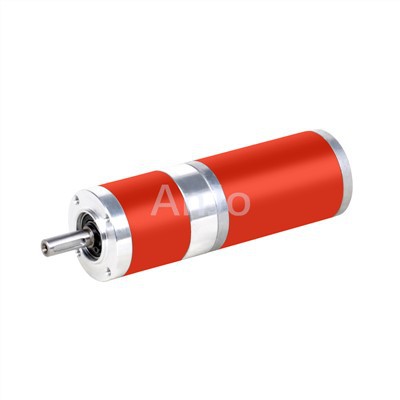
As a screw jack supplier, we offer a wide range of products with different specifications and features to meet the diverse needs of our customers. Whether you are involved in bridge construction, industrial automation, or any other application that requires long – distance lifting, we can provide you with the right screw jack solution. Our team of experts can also offer technical support and advice to help you select the most suitable screw jack for your specific requirements.
Servo Motor If you are interested in learning more about our screw jack products or have any questions regarding long – distance lifting applications, we encourage you to contact us for a consultation. We look forward to discussing your needs and providing you with the best possible solutions.
References
- "Mechanical Design Handbook" by Robert C. Juvinall and Kurt M. Marshek.
- "Industrial Machinery Mechanisms Handbook" by Darin M. Hart.
- Technical documents and research papers from leading screw jack manufacturers.
Hangzhou ANG Drive Co., Ltd.
We’re well-known as one of the leading screw jack manufacturers and suppliers in China, also support custom service. Please feel free to wholesale high quality screw jack made in China here from our factory. Contact us for more details.
Address: No.185, Jincheng Rd., Hangzhou 311202, China
E-mail: export6@angdrive.com
WebSite: https://www.angdrive.com/
