Hey there! I’m a supplier of Dipotassium Phosphate, and I often get asked about how this compound reacts with acids. So, I thought I’d take a moment to break it down for you in a way that’s easy to understand. Dipotassium Phosphate
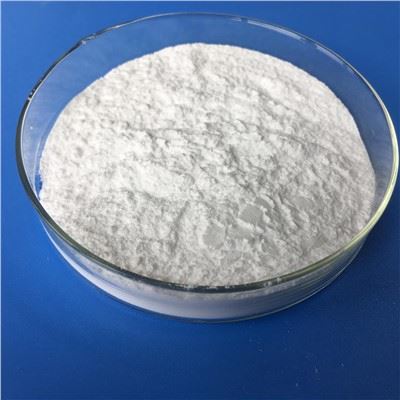
First off, let’s talk a bit about Dipotassium Phosphate itself. It’s also known as potassium hydrogen phosphate. Its chemical formula is K₂HPO₄. It’s a white, water – soluble salt that’s commonly used in a bunch of industries. You’ll find it in food as an additive, in fertilizers to give plants a boost of potassium and phosphorus, and in the pharmaceutical world for making all sorts of medications.
Now, when Dipotassium Phosphate meets an acid, some interesting stuff happens. An acid is a substance that can donate a proton (H⁺ ion). Dipotassium Phosphate has a basic nature because the phosphate part of it can react with those protons. Let’s dive into the chemistry of these reactions.
Reaction with a Strong Acid
Let’s start with a strong acid like hydrochloric acid (HCl). When K₂HPO₄ reacts with HCl, we can write out the chemical equation like this:
K₂HPO₄ + HCl → KH₂PO₄+ KCl
In simple terms, one of the potassium ions (K⁺) in Dipotassium Phosphate gets replaced by a hydrogen ion (H⁺) from the hydrochloric acid. This forms potassium dihydrogen phosphate (KH₂PO₄) and potassium chloride (KCl). Potassium dihydrogen phosphate is another important chemical that’s also used in various applications.
If we add more hydrochloric acid, a second reaction can occur:
KH₂PO₄ + HCl → H₃PO₄+ KCl
Here, another hydrogen ion from the acid replaces the remaining potassium ion in potassium dihydrogen phosphate, forming phosphoric acid (H₃PO₄) and potassium chloride.
The overall reaction when enough hydrochloric acid is added is:
K₂HPO₄ + 2HCl → H₃PO₄+ 2KCl
This shows that Dipotassium Phosphate can react step – by – step with the acid, and the final products depend on the amount of acid present.
Reaction with a Weak Acid
Now, let’s consider a weak acid, say acetic acid (CH₃COOH). Weak acids don’t dissociate completely in water, so the reaction is a bit different. The chemical equation for the reaction between K₂HPO₄ and acetic acid is:
K₂HPO₄ + CH₃COOH ⇌ KH₂PO₄+ CH₃COOK
This reaction is an equilibrium reaction. That means it doesn’t go all the way to the right. Some of the reactants will always be present along with the products. The acetic acid donates a proton to the Dipotassium Phosphate, forming potassium dihydrogen phosphate and potassium acetate.
The reason it’s an equilibrium reaction is because acetic acid is not very good at giving up its proton compared to a strong acid like HCl. The position of the equilibrium depends on things like the concentrations of the reactants and the temperature.
Practical Implications of These Reactions
In the food industry, these reactions are super important. Dipotassium Phosphate is used as a buffering agent. A buffer is a substance that can resist changes in pH. When an acid is added to a food product that contains Dipotassium Phosphate, the phosphate reacts with the acid to prevent the pH from dropping too much. This helps to maintain the flavor, texture, and shelf – life of the food.
In the fertilizer industry, if the soil has a high acid content, Dipotassium Phosphate can react with the soil acids. This reaction can make the nutrients in the fertilizer more available to the plants. For example, when it reacts with soil acids to form potassium dihydrogen phosphate, the plants can more easily absorb the phosphorus in this form.
Safety Considerations
When handling Dipotassium Phosphate and acids, safety is key. Both Dipotassium Phosphate and acids can be hazardous if not used properly. Acids can cause burns to the skin and eyes, and inhaling their fumes can be really bad for your lungs. Dipotassium Phosphate can also cause irritation if it comes into contact with your skin or eyes.
Always wear appropriate protective equipment like gloves, goggles, and a lab coat. Make sure you’re working in a well – ventilated area, especially when dealing with strong acids. And follow all the safety guidelines and procedures.
Why Choose Our Dipotassium Phosphate
As a supplier, I can tell you that our Dipotassium Phosphate is top – notch. We have strict quality control measures in place to ensure that you’re getting a product that’s pure and consistent. Whether you’re in the food, fertilizer, or pharmaceutical industry, our product will meet your needs.
Our Dipotassium Phosphate is produced using the latest technology and best manufacturing practices. This means that you can rely on it to react as expected when it comes into contact with acids. You won’t have to worry about impurities that could mess up your processes.

If you’re looking for a reliable source of Dipotassium Phosphate, look no further. We’re here to provide you with high – quality products and great customer service. Whether you need a small amount for research purposes or a large quantity for industrial production, we’ve got you covered.
Let’s Connect
Dipotassium Phosphate If you’re interested in purchasing Dipotassium Phosphate, I’d love to have a chat with you. We can discuss your specific requirements, talk about pricing, and figure out the best way to get the product to you. Just reach out, and we can start the conversation.
References
- Chang, Raymond. Chemistry. McGraw – Hill Education, 2010.
- Zumdahl, Steven S. Chemical Principles. Cengage Learning, 2013.
- Food and Agriculture Organization of the United Nations. "Specifications for Food Additives: Dipotassium Phosphate." FAO, 2018.
Jiangsu Kolod Food Ingredients Co., Ltd.
As one of the most professional dipotassium phosphate manufacturers and suppliers in China, we’re featured by quality products and good price. Please rest assured to wholesale bulk dipotassium phosphate made in China here and get free sample from our factory. Customized orders are welcome.
Address: South Side of Weier Road, Guanyun Development Zone, Lianyungang City, Jiangsu Province, China
E-mail: sales1399@jskolod.com
WebSite: https://www.kolod-group.com/
