When I first started in the welding wire supply business ten years ago, I’ll admit I thought all welding wire was pretty much the same. I remember a regular customer, a small fabrication shop owner named Joe, called me in a panic one morning. He’d been halfway through a stainless steel job when his usual wire supplier was out of stock, and he grabbed a roll from a local hardware store just to keep going. By the end of the day, half his welds were cracking, and he was staring at a pile of scrapped parts. That day taught me something I’ve carried with me ever since: welding wire isn’t just “wire you weld with” — it’s a critical component that can make or break a project, whether you’re a weekend welder working on a fence or a large-scale fabricator building heavy machinery. Wire
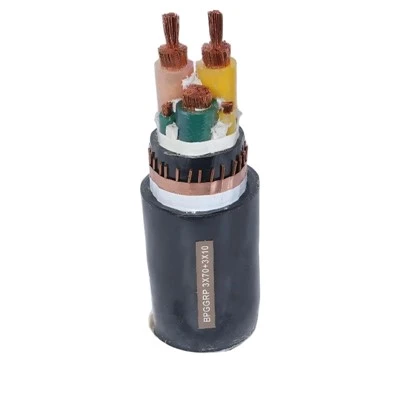
So what exactly is welding wire, anyway? At its core, welding wire is a consumable electrode used in most arc welding processes, from MIG (Metal Inert Gas) to FCAW (Flux-Cored Arc Welding). Unlike solid wire you might use for other projects, welding wire is specially formulated with precise chemical compositions, uniform diameters, and consistent mechanical properties. It doesn’t just carry the electrical current that creates the arc — it also melts to fill the gap between two pieces of base metal, bonding them together as it solidifies. That’s why the right wire choice matters: it needs to match the base metal it’s joining, handle the welding environment (like outdoor wind or high humidity), and meet the strength or corrosion resistance requirements of the final product.
Let’s break down the key science behind welding wire to make it make sense. Every weld starts with an arc — the intense, sustained spark that forms between the welding wire and the base metal. As the wire melts, tiny droplets of molten metal are transferred across the arc into the weld pool (the small pool of melted base metal). The wire’s chemical composition is tailored to control how these droplets form, how they transfer, and what the final weld metal will be made of. For example, if you’re welding mild steel, you need a wire that adds just enough manganese and silicon to deoxidize the weld pool — that means it removes impurities like oxygen that would cause porosity (small holes) or weak spots in the weld. If you’re welding stainless steel, though, the wire has to match the chromium and nickel content of the base metal to make sure the weld has the same corrosion resistance as the parts you’re joining. Diameter is another big factor: thinner wires (like 0.030 inches) work for thin sheet metal because they use less heat, while thicker wires (0.045 inches or more) deliver more heat for thick steel plates, speeding up work on heavy fabrication jobs.
Now that we’ve covered the basics, let’s talk about the main types of welding wire, because picking the right one comes down to knowing which type fits your project. I’ll explain each one, what it’s used for, and what to look out for — things I’ve learned from working with hundreds of fabricators and DIY welders over the years.
First up is Solid MIG Wire. This is the most common type you’ll see, a bare, solid metal wire with no inner flux core. It’s used with MIG welding, which uses a shielding gas (like argon, or a mix of argon and carbon dioxide) to protect the molten weld pool from contamination in the air. The big benefit of solid MIG wire is its versatility. For mild steel jobs, our most popular solid wire is ER70S-6 — it’s affordable, works on everything from car parts to general construction, and produces smooth, clean welds when paired with the right gas. For stainless steel, ER308L solid wire is the go-to; its low carbon content prevents intergranular corrosion, a common issue that makes stainless steel welds rust over time. And for aluminum? ER4043 solid wire is standard because it flows well with aluminum, resists cracking, and works on everything from boat repairs to window frames. The only downside is that solid wire needs a shielding gas, so it’s not ideal for outdoor projects where wind could blow the gas away — that’s where flux-cored wire comes in.
Next is Flux-Cored Wire, or FCAW wire. This wire isn’t solid — it’s a hollow tube filled with flux powder, which does two jobs: it creates its own shielding gas (so you don’t need an external gas cylinder) and adds alloys to the weld metal for strength and corrosion resistance. There are two main types of flux-cored wire: self-shielded (which doesn’t need any external gas at all) and gas-shielded (which works better for indoor, high-quality work). Self-shielded FCAW wire is a lifesaver for outdoor construction projects, like building steel bridges or farm equipment, because it works even in light wind and rough weather. I’ve had customers use it to repair railings on construction sites where setting up a gas cylinder would be a hassle. Gas-shielded FCAW wire, on the other hand, produces less smoke than self-shielded and cleaner welds, making it perfect for indoor fabrication, like making metal cabinets or machinery parts. The flux inside the wire also helps with deep penetration, which is why it’s great for thick metal. One tip I always give: self-shielded FCAW wire can produce more spatter (small bits of molten metal that stick to the weld area) than solid wire, so you’ll need a good spatter spray to clean up afterward.
Third is TIG Welding Rod Wire, often just called TIG wire. Wait, I know what you’re thinking — TIG uses a non-consumable tungsten electrode, right? So why is the wire considered part of the consumables? Because even though the tungsten doesn’t melt, you add a separate filler wire (the TIG wire) to the weld pool as you go. TIG is a precision process, used for high-quality welds where appearance matters — like custom metal art, aircraft parts, or delicate plumbing work. TIG wire is available for all the same metals as MIG solid wire: ER70S-6 for mild steel, ER308L for stainless, ER4043 for aluminum. The key difference here is that TIG wire comes in much smaller diameters, often 1/16 of an inch or less, because you’re feeding it manually into the weld pool. It’s also supplied in straight lengths (not spools, like MIG wire) to fit TIG torches. I always tell new TIG welders to practice feeding the wire steadily — too fast and it can clog the torch, too slow and the weld will be uneven.
Fourth is Stick Welding Electrode Wire, or stick rods. Stick welding is one of the oldest processes, and it uses a coated metal rod that acts as both the electrode and the filler. The coating on the rod does the same job as flux in FCAW wire: it creates shielding gas, removes impurities, and adds alloys to the weld. Stick rods come in different types for different jobs: E6011 is a general-purpose rod for mild steel, great for outdoor work because it works on rusty or dirty metal without prep, which is perfect for fence repairs or structural work. E7018 is another popular one; it produces strong, low-spatter welds, works on both thin and thick steel, and is often used for pressure vessels or pipeline work. Stick rods are supplied in 14-inch lengths, not spools, which makes them less convenient for high-volume work but ideal for small jobs or places where a welding machine with a spool gun isn’t practical.
Wait, I should also mention some specialty welding wires, because I’ve seen these used for really specific projects. There’s nickel alloy wire, like ERNiCrFe-7, which is used for welding high-temperature components, like power plant equipment or aerospace parts. It can handle extreme heat without losing strength, which regular steel wire can’t. Then there’s hardfacing wire, which isn’t for bonding two parts together — it’s for building up a hard, wear-resistant surface on parts like bulldozer blades, drill bits, or agricultural plows. Hardfacing wire has high levels of chromium and carbon, so it creates a tough outer layer that doesn’t wear down quickly, even with constant abrasion. And don’t forget about aluminum and copper wire, which have lower melting points than steel and need special handling — aluminum wire, for example, requires a larger contact tip on your MIG gun to accommodate its softer metal, which is a common mistake new welders make.
After ten years in this business, I’ve seen firsthand how choosing the wrong welding wire can turn a simple project into a headache. I mentioned Joe the shop owner earlier — he called me a few months after that disaster, apologized, and told me he’d switched to our ER70S-6 solid wire for most of his mild steel jobs. He said his scrap rate dropped by 30% just by matching the right wire to his base metal. That’s the thing about welding wire: it’s not a “one-size-fits-all” product. A lot of customers come to us thinking, “I just need wire for MIG welding, give me whatever’s cheapest” — but that’s where they go wrong. If you’re welding thin aluminum sheet metal for a boat, using ER70S-6 steel wire will result in brittle, porous welds that will fail quickly. If you’re working on a pipeline where strength is non-negotiable, using a generic wire that doesn’t have the right alloy content could lead to dangerous failures.
That’s why my team and I take the time to ask questions before we recommend anything. We want to know: what metal are you welding? Is it indoors or outdoors? Do you need the weld to be corrosion-resistant? How thick is your base metal? What welding process are you using? Those small details make all the difference. I remember a customer last year, a custom bike builder, came to us looking for wire for stainless steel frames. He’d been using standard ER308L wire, but his welds were showing dark discoloration, which he couldn’t sell. We suggested ER308LSi wire, which has a small amount of silicon to improve wetting (how the wire spreads in the weld pool) and reduce discoloration. He got back to us a week later, saying his welds were clean enough to pass his quality checks and his customers were thrilled. That’s the kind of problem-solving we pride ourselves on — it’s not just selling wire, it’s helping you pick the right tool for your job.

If you’re working on a project right now and aren’t sure which welding wire to use, or if you’re tired of scrap parts and wasted time from using the wrong wire, don’t guess. Give our team a chance to help you find the right solution. We carry all the main types: solid MIG wire, flux-cored wire, TIG filler wire, stick electrodes, and specialty alloys, all tested to meet industry standards for strength and consistency. We work with small DIY welders and large fabricators alike, so no job is too big or too small. Whether you need a single 1-pound spool for a weekend fence repair or a bulk order of 50-pound rolls for a month-long construction project, we can supply what you need, when you need it. Contact our team to discuss your welding wire needs today — we’re here to make sure your next weld is strong, clean, and successful.
Wire References
AWS A5.1: Specification for Carbon Steel Electrodes for Shielded Metal Arc Welding
AWS A5.18: Specification for Carbon Steel Electrodes and Rods for Gas Shielded Arc Welding
AWS A5.20: Specification for Flux-Cored Arc Welding Electrodes
Lancaster, J. F. (1999). Metallurgy, Welding, and Fabrication. Woodhead Publishing
Anhui Huawang Cable Co., Ltd.
As one of the most professional wire manufacturers and suppliers in China, we also support customized service. If you’re going to buy discount wire, welcome to get pricelist from our factory. Quality products and reasonable price are available.
Address: No. 32, East Street, Batian Street, Datong Town, Tianchang City, Anhui Province
E-mail: Linda@huawangcable.com
WebSite: https://www.huawang-cable.com/
