If you’ve ever stood in a factory control room, knelt next to a building automation panel, or helped a team wire a small-scale industrial automation setup, chances are you’ve worked with control cables labeled “low voltage.” As someone who’s been supplying these cables for over a decade—answering every question from new installers to seasoned plant managers—one of the most common queries I get is: “What exactly is the voltage range for control cable low voltage?” It’s a question that trips up a lot of people, especially when they’re comparing standards across regions, or trying to match a cable to the exact needs of their project. Let’s break this down clearly, from the basics of why control cables are different from power cables, to the actual voltage ranges you’ll encounter in real-world applications, and how that impacts what you should be looking for when ordering. Control Cable Low Voltage
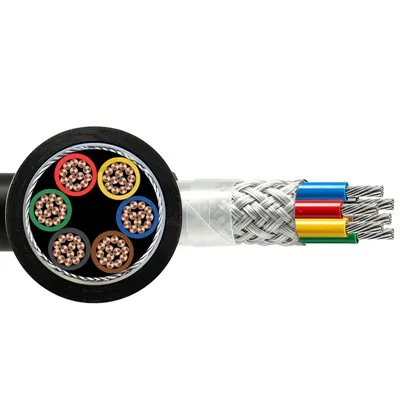
First, it’s important to separate control cables from power cables, because that’s where a lot of confusion starts. Power cables are designed to carry large amounts of electricity to run heavy equipment—think motors, pumps, or HVAC systems—at voltages high enough to do that work efficiently. Control cables, by contrast, are the “nervous system” of those systems. They carry the low-level signals that tell equipment when to start, stop, speed up, or adjust settings, plus they power small control devices like sensors, relays, and push buttons. That means their voltage isn’t about delivering power, it’s about sending a reliable, consistent signal without interference. So the “low voltage” label for these cables isn’t just a marketing term; it’s a classification that comes from safety standards set by organizations like the International Electrotechnical Commission (IEC), the National Electrical Manufacturers Association (NEMA), and regional bodies like UL in the U.S. or BS in the U.K.
Let’s start with the global baseline, because standards don’t all say the same thing, but they overlap a lot. The IEC, which sets rules for electrical equipment used in most countries outside North America, defines low voltage as any voltage between 50 volts alternating current (VAC) and 1000 VAC, or 120 volts direct current (VDC) and 1500 VDC, when measured between conductors, or between a conductor and the ground. Wait, that’s a big range, right? But here’s the catch: control cables fall into the lower end of that IEC range, because most control applications don’t need that kind of power. In fact, for the vast majority of control work, the voltage range is way narrower, and split into two main categories: extra-low voltage (ELV) and standard low voltage for controls.
Extra-low voltage, or ELV, is the sweet spot for most signal-based control cables. IEC defines ELV as up to 50 VAC or 120 VDC, which is where the smallest control signals live. If you’re wiring a set of push buttons to a motor starter, connecting a temperature sensor to a PLC (programmable logic controller), or running cables between a building’s fire alarm panel and a smoke detector, that’s almost always ELV. Why this range? It’s considered safe for most non-industrial and light industrial spaces, because it can’t cause a lethal electric shock under normal conditions. That’s why you don’t need heavy insulation on these cables—they can have thinner jacketing, and you can run them alongside other low-voltage cables without as much risk of arcing or short circuits. For us as a supplier, these are the most popular control cables we ship, because they work for 70% of the jobs we get: small automation setups, office building controls, agricultural equipment, HVAC systems for commercial spaces.
Then there’s the next tier: what’s often called “medium low voltage” for controls, which runs from 50 VAC up to 600 VAC, or 120 VDC up to 900 VDC. This is the range for heavier industrial control applications. Think of a car manufacturing plant’s assembly line, where a control cable needs to run from a main PLC rack to a large conveyor drive, or to a hydraulic pump’s control unit. These voltages are higher than ELV, so the cables need thicker insulation to prevent breakdown, and better shielding to avoid interference from nearby power cables. If a control cable running at 480 VAC (a common industrial voltage for motors and controls) gets damaged, it can cause a short that takes down an entire line, so we specify these cables with extra stranding to handle more current, and PVC or cross-linked polyethylene (XLPE) jacketing that resists oils, chemicals, and extreme temperatures. It’s important to note that this 600 VAC upper limit for control cables is consistent in the U.S. and Canada, per the National Electrical Code (NEC), which is a big reason North American suppliers like us focus on this range as our core product line. A lot of new installers will mistakenly use a power cable for a 480 V control application, but power cables are designed to carry high current for long runs, while control cables are made for low-current, short-distance control signals—using the wrong one can lead to signal loss or safety hazards.
Now, what’s the line that separates low voltage control cables from medium voltage (MV) cables for controls? That’s usually around 600 VAC for North American standards, and 1000 VAC for international IEC standards. Any control cable operating above that is classified as medium voltage, and it’s a completely different product—thicker insulation, larger conductor sizes, designed to handle higher electrical stress. We don’t stock those, because most of our customers don’t need them, but we do work with industrial plants that have special high-voltage control systems, and we can source compliant cables when needed.
I should also address a common question I get from installers: do control cables have a single fixed voltage rating? No, not at all. A control cable’s voltage rating is how much voltage it can safely withstand, not the voltage it will always carry. For example, a 600 V control cable can carry any voltage from ELV (24 VDC for a PLC input) up to 600 V, depending on the job. That’s why you’ll see us list our cables with a voltage rating, not a specific operating voltage—because they’re built to adapt to whatever control application you’re using them for. That’s a key point people miss when they’re shopping for control cables: don’t just pick a cable because it’s labeled “low voltage”—make sure its rated voltage matches the maximum voltage in your system. If you’re working with a 480 V control circuit, a 300 V cable will fail, plain and simple. We often get calls from contractors who bought a cheap, low-rated cable that burned out after a week on a 500 V project, so we make sure to walk them through matching the rating to their system, not just the price.
Another thing to consider is regional differences, because that can throw off even experienced buyers. In Europe, the definition of low voltage control cables often tops out at 1000 VAC, but most control applications there still use ELV or up to 600 V, same as North America. Some countries in Asia have their own standards, but they usually align with IEC for control cables. The big mistake we see is when a project is being built to North American code, but a contractor sources a cable rated to a European standard, which might not meet UL requirements for insulation thickness. That’s why we always ask for the project’s location and governing code before we recommend a cable—it’s not just about the voltage number, it’s about compliance.
Let’s also talk about why this voltage range matters for the performance of control systems. If a control cable is rated for too low a voltage, it can experience dielectric breakdown—meaning the insulation breaks down under the voltage load, leading to a short circuit, signal loss, or even fire. For a factory line, a single short can cost thousands of dollars in downtime, not to mention the cost of repairing the cable. On the other end, if you use a cable rated for way higher voltage than you need, you’re wasting money. Those extra layers of insulation add cost, so a 24 V control application doesn’t need a 600 V cable—you can get a lower-rated, more affordable cable that works just as well, as long as it’s compliant. That’s where our experience as a supplier comes in: we don’t just sell you the most expensive cable, we match the exact voltage range and code requirements to your project, so you get reliability without overspending.
I’ve seen this play out firsthand. A few years back, a small manufacturing plant reached out to me in a panic. They had a control cable on their packaging line that kept failing, and their original supplier had sent a cable rated for 300 V, even though their line ran at 480 V. The 300 V insulation couldn’t handle the voltage, so it was arcing every few days, shutting down production. We replaced it with a 600 V control cable, rated for industrial environments, and the line hasn’t had an issue since. That’s the kind of problem we solve every day, because we know the ins and outs of voltage ranges for control cables, and how to match the right product to the right job.
It’s also important to note that control cables aren’t just voltage-rated—their rating also includes things like temperature range, shielding, and resistance to environmental factors. But the voltage is the baseline, the first thing you need to get right. For example, a control cable used outdoors in Arizona will need a higher temperature rating, but it still has to fall within the voltage range your system requires. A cable used in a food processing plant will need to be oil-resistant, but it’s still sized for your control circuit’s voltage. All those factors build on the base voltage rating, which is why that’s the starting point when sourcing.
Now, let’s wrap this up with what you actually need to remember when you’re working with control cable low voltage ranges. First, control cables are for signals and low-power control, not for high-power distribution, so their voltage ranges are much narrower than power cables. Second, most standard control applications fall into two groups: ELV (up to 50 VAC / 120 VDC) for small signals, buttons, sensors, and general control, and up to 600 VAC for heavy industrial controls per North American NEC rules, or up to 1000 VAC for international IEC standards. Third, always match the cable’s rated voltage to the maximum voltage in your system, and make sure it meets the governing code for your project. Fourth, don’t overbuy a higher voltage cable than you need—that’s a waste of money, but don’t underbuy either, because that can lead to costly downtime or safety issues.
If you’re in the market for control cables, and you’re not sure exactly what voltage range you need, or you want to make sure you’re getting a product that’s compliant and built to last, reach out. We work with contractors, plant engineers, electrical teams, and small business owners to walk through their projects, clarify voltage requirements, and supply cables that fit their exact needs. It’s not just about selling a cable—it’s about making sure your control systems work reliably, every time.
RF Coaxial Cable References
- International Electrotechnical Commission (IEC). “Low-Voltage Electrical Installations.” IEC 60364, 2020.
- National Electrical Manufacturers Association (NEMA). “Control Cables for Industrial Automation.” NEMA VE 1, 2018.
- National Fire Protection Association (NFPA). “National Electrical Code (NEC) Article 725: Low-Voltage Control Circuits.” NFPA 70, 2023.
- Underwriters Laboratories (UL). “Standard for Control Cables.” UL 1277, 2021.
Yangzhou Huayu Cable Co., Ltd.
Yangzhou Huayu Cable Co., Ltd. is one of the most professional control cable low voltage manufacturers and suppliers in China, also supports customized service with low price. Please feel free to wholesale advanced control cable low voltage made in China here from our factory. Contact us for pricelist.
Address: No. 9 Jingang Road, Yangzhou City, Jiangsu Province, China
E-mail: huayucableco@126.com
WebSite: https://www.huayucabletech.com/
