Hey everyone, if you’ve ever stood next to a city bus at a stop, you might not have thought about the thick, tough cables running under the hood or along the frame that keep that engine, lights, and AC cranking. As a bus cable supplier, this is the question I get asked all the time: “What’s the current carrying capacity of a bus cable anyway?” And it’s not a one-size-fits-all answer—way more goes into it than just “thicker = more power.” Let me break this down like I would chat with a customer who’s picking up cables for their new fleet, no boring textbook jargon, promise. Bus Cable
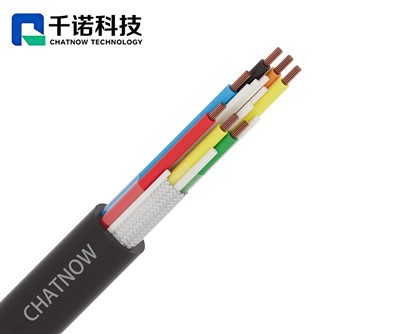
First off, let’s get one thing straight: current carrying capacity (we also call this ampacity, but I’ll stick to “current capacity” for now) isn’t just a random number printed on a cable spool. It’s how much electrical current a cable can handle without overheating to the point of melting the insulation, frying the conductors, or starting a fire—big no-no on a 40,000 lb bus that’s carrying 50 passengers. A lot of new fleet managers or even small repair shops think “if 10 gauge works for my home wiring, it’ll work for my bus” and that’s where they go wrong. Bus cables live in way harsher conditions than house wires: extreme heat under the hood in summer, freezing cold up north, vibration from potholes and rough roads, even moisture from rain or road salt. All that stuff changes how much current a cable can safely carry.
Let’s start with the basics of the cable itself—because that’s the foundation. The conductor material is the biggest factor. 99% of bus cables use copper, right? Wait, no—sometimes aluminum for super long ground leads, but copper is the go-to for power cables because it conducts way better. Copper has lower resistance, so it doesn’t heat up as much when current flows through it. If you tried to use aluminum for the main starter cable, you’d need a way bigger cable to carry the same current, which is heavier and more expensive. That said, high-grade copper isn’t all the same. We use tinned copper for most of our bus cables, actually. The tin plating stops corrosion—road salt, oil, that nasty stuff under the hood eats regular copper over time, and corrosion increases resistance, which craters current capacity. Tinned is non-negotiable for us, no exceptions.
Then there’s the conductor’s cross-sectional area—so gauge, but not the weird AWG gauge that’s common for small wires. For heavy-duty bus cables, we use kcmil (thousand circular mils) or even square millimeters, because a 10 gauge home wire is tiny compared to a 1/0 kcmil cable (that’s a “one-aught” cable for short) that’s used for a bus’s starter. Let’s do a quick example to make this real: a 1/0 kcmil copper cable with tinned strands, running at 77°F (25°C) ambient temp, not compressed tight against other cables, can handle around 150 amps. A 2/0 kcmil? That jumps to ~180 amps, and a 4/0 kcmil? Close to 250 amps. That makes sense—bigger conductor = more space for current to flow = less heat buildup. But wait—this is just the ideal scenario. Throw in a few real-world factors, and that number drops fast.
Which brings us to the biggest wild card for bus cables: installation conditions. This is where most suppliers will quote you that perfect 150 amp number for 1/0 cable, but forget to tell you that number only applies if the cable is hanging in open air, no other wires touching it, at a cool 77°F. On a bus? You’re running that cable through a wire loom packed with 10 other thick power cables under the hood, where temp can hit 200°F on a hot July day. If cables are bunched together, they trap heat—each cable loses some ability to cool down, so their current capacity drops. Let’s say you have 10 cables all tight in a loom, ambient temp 122°F (50°C)—that 150 amp 1/0 cable I mentioned earlier? It might only handle 110 amps safely. If you push it harder than that, the insulation starts breaking down, and eventually the conductor can melt. That’s a nightmare for a bus stranded on the highway.
Another big one: what the cable is actually powering. Is this a starter cable that only draws current for 2 seconds when you turn the key? That’s a short-duration load, so current capacity is way higher than a cable running a bus’s auxiliary power unit (APU) for hours while the engine is idling at a rest stop. Or a cable for the traction motor on an electric bus? That’s a constant load, drawing current for minutes or even hours at a time, so you can’t just go by the ampacity chart—you have to derate it even more to keep heat consistent. Electric buses are a huge part of our business these days, by the way—their cables handle way more current than diesel buses, sometimes 300 amps or more, because they’re running big battery packs and traction systems. I’ve had clients come to us thinking a standard diesel starter cable would work for their electric bus main power, and that’s a hard pass—those cables are built totally different, with higher-grade insulation that can handle the voltage too, not just current.
Insulation is another thing people sleep on. Bus cables have to stand up to way more than just current. We use cross-linked polyethylene (XLPE) for most of our power cables, or EPDM rubber for extra flexibility for places like doors or moving parts. XLPE can handle higher temps than regular PVC—up to 250°F continuously, vs 176°F for PVC. So if you’re running a cable in a hot engine bay, XLPE keeps the insulation intact longer, which means you can run a little more current through it without failing. Some of our heavy-duty cables even have dual insulation, an inner layer for heat and an outer layer for oil and abrasion, which is perfect for buses that bounce over curbs and get covered in grease. That extra insulation might make the cable a tiny bit bigger, but it protects the conductor, so the current capacity stays reliable for years.
Road conditions matter too, weird as that sounds. If a bus is running in a city where they salt the roads all winter, corrosion eats at the conductor strands over time, which increases resistance. A cable that was rated for 150 amps new might only handle 130 amps after 5 years of salt exposure, because the corroded strands don’t conduct as well. That’s why we specify tinned copper, like I mentioned earlier—tin is way more corrosion-resistant than bare copper, so your ampacity stays consistent longer. We also use stranded conductors instead of solid, by the way. Solid copper is stiffer, so it cracks when the bus vibrates, which creates tiny gaps that increase resistance. Stranded is flexible, holds up to vibration, and all the small strands together give you the same current capacity as a solid conductor of the same size, but way more durable.
Wait, let’s talk about short circuits for a second, because that’s a big reason current capacity isn’t just a steady number. A short circuit is when electricity takes a wrong path, so all the current that was supposed to flow through the cable suddenly surges. For a few milliseconds, that current can be 10 or even 100 times the normal operating current. The cable’s current capacity has to account for that too—because even if it’s only 0.1 seconds, that surge can melt the cable if it’s not built for it. That’s where the insulation’s short-circuit rating comes in. We test every batch of our cables to make sure they can handle that momentary surge without failing, because a short circuit in a bus wiring harness can start a fire faster than you can react.
I get it, this feels like a lot of numbers and terms, but that’s why when a customer comes to us, we don’t just pull a cable off the shelf and say “here’s your 200 amp cable.” We ask them: What’s this cable powering? Where are you running it on the bus? What climate do you operate in? How long do you need this cable to last? For example, a client in Phoenix running buses all year in 110°F heat needs a cable rated for higher ambient temps than a client in Seattle where it rarely gets over 80°F. A transit bus that’s going to be in service for 12 years needs a more durable, corrosion-resistant cable than a shuttle bus that’s replaced every 5 years.
Let me give you a real example from last month. A small transit company in Denver came to us, saying they needed new starter cables for their 20 diesel buses. They had bought cables from a different supplier that were supposed to be 250 amp, but they kept burning out within a year. When we looked at their install, they were bunching 6 starter cables together under the hood, with no extra cooling, and Denver’s summer temps hit 95°F under the hood. The other supplier was quoting open-air ampacity, not derated for the bunched installation. We sold them 4/0 kcmil tinned copper cables, derated correctly for their setup, with XLPE insulation, and so far they’ve had zero issues in 8 months. That’s what we do—we don’t just sell cables, we figure out what their current capacity actually needs to be for their specific bus and setup, not just a generic chart number.
Another thing that’s changed the game lately is electric buses. We’ve had so many orders for high-voltage bus cables for electric transit buses, and their current capacity is way higher than diesel. One client’s main battery cable is rated for 350 amps continuous, at 400V, and it’s built with 2 parallel conductors of 500 kcmil, XLPE insulation, and a tough outer jacket that can handle rock chips and road salt. Those cables aren’t just thick—they’re engineered to handle constant high current, plus the high voltage, which is a whole other can of worms, but that’s why we have a separate team that works specifically on EV bus cables, because their current needs are nothing like old diesel.
Wait, should I address a common myth? A lot of people think “if I want more current, just use a bigger cable.” That’s half true, but bigger cables are heavier, and buses are already dealing with weight to get better gas mileage (or better range for EVs). If you can optimize the current capacity with better conductor material, insulation, and installation, you don’t have to go 2 sizes bigger and add unnecessary weight. That’s a big selling point for us—we design cables that hit the exact current capacity you need, not a overbuilt one that adds extra cost and weight to your fleet.
So to wrap this up, the current carrying capacity of a bus cable isn’t a single number. It depends on conductor material (copper is best, tinned is better), conductor size (bigger = more current, but not always the only factor), installation (bunched cables, high ambient temp drop capacity), load type (short vs constant), insulation rating, and even the climate you run your bus in. If a supplier gives you a number without asking any of those questions, they’re not doing you right—they’re giving you a generic rating that might not work for your actual setup.
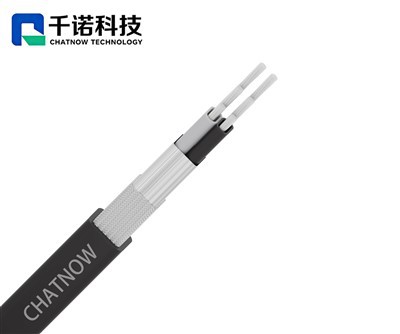
If you’re outfitting new buses, replacing old cables that keep failing, or switching to electric, and you want to get the right bus cables with the correct current capacity for your needs, hit us up. We can walk you through exactly what you need, no confusing jargon, no overpriced overbuilt cables, just reliable cables that will keep your fleet running all year long.
Spiral Cable References
- SAE International. (2021). SAE J1127: Standard for Heavy-Duty Electrical Wire and Cable for Motor Vehicles.
- IEEE. (2019). IEEE Standard for Calculating the Current-Temperature of Bare Overhead Conductors.
- American Bureau of Shipping. (2020). Guidelines for Electrical Systems in Transit Buses.
- The Wire Association International. (2022). Heavy-Duty Cable Installation and Performance for Commercial Vehicles.
Zhejiang Chatnow New Material Technology Co., Ltd.
Zhejiang Chatnow New Material Technology Co., Ltd. is well-known as one of the leading bus cable manufacturers and suppliers in China, specialized in providing high quality customized service. Please feel free to wholesale high-grade bus cable at competitive price from our factory.
Address: Building 12, No.9 Huajin Road, ZhouWangMiao Town Innovation Center, Haining, Zhejiang 314400
E-mail: info@chatnow-cable.com
WebSite: https://www.chatnow-cable.com/
