If you’ve ever pulled up to a gas station and filled your tank with gasoline, or if you’ve ever picked up a plastic water bottle, a bottle of laundry detergent, or even the insulin someone with diabetes relies on, you’ve benefitted from work that happens far from the highway, far from a grocery store shelf, and far from most people’s daily routines. That work starts at an oil refinery, and one of the most unassuming yet critical pieces of equipment in that entire process is a refinery chemical tower—sometimes called a fractionation column, distillation tower, or just plain chemical tower. For nearly two decades, my team and I have designed, manufactured, and installed these towers for refineries across North America, and I’ve lost count of how many times people have asked me, “Wait, what even is that thing?” Chemical Tower
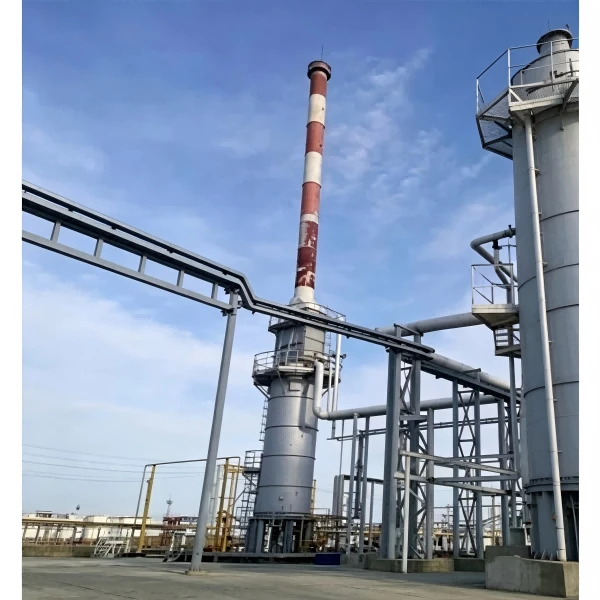
Let’s break it down simply, because it’s easy to overcomplicate. Crude oil, the raw material we pull out of the ground, isn’t a single substance. It’s a messy, soupy mix of thousands of different hydrocarbons—molecules made of hydrogen and carbon, arranged in all kinds of shapes and sizes. Some are tiny, lightweight molecules that evaporate at very low temperatures; others are huge, heavy molecules that stay thick and gooey even when heated to hundreds of degrees. If you want to turn that messy mix into usable products, you can’t just heat all of it to one temperature and hope for the best. That’s where a refinery chemical tower comes in. It’s the refinery’s version of a filter, a sorting machine, and a precision oven all rolled into one tall, steel cylinder that stands anywhere from 50 feet to over 200 feet high—roughly the height of a 20-story building.
Here’s how it works, step by step, in plain terms. First, crude oil is heated in a furnace to a super high temperature—between 600 and 700 degrees Fahrenheit, hot enough to turn almost all of the hydrocarbons into vapor. That hot vapor doesn’t go straight into the finished product; it’s piped to the bottom of the chemical tower. The tower isn’t empty inside, though. Inside, there are stacks of horizontal trays (we call them sieve trays or bubble cap trays, depending on the refinery’s needs) or sheets of metal called packing, which create thousands of surfaces for vapor to touch as it rises.
As the hot vapor moves up through the tower, it gets cooler and cooler the higher it goes. Lightweight, small molecules have low boiling points, so they stay in vapor form and keep rising all the way to the top of the tower. Heavy, large molecules have high boiling points, so they turn back into liquid when they hit a cooler level and drip down to the bottom of the tower. In the middle, there’s a sweet spot where medium-sized molecules turn to vapor then back to liquid, perfect for products like diesel or jet fuel. It’s like a natural sorting process: every layer of the tower is calibrated to catch a specific type of molecule. At the very top, we collect the lightest stuff—gasoline, naphtha, the materials that go into making plastics. At the bottom, we collect the heaviest leftovers—fuel oil, asphalt, the thick stuff that still has value even if it’s not a finished fuel.
I’ve heard old-timers at refineries say the chemical tower is the heart of the whole operation, and honestly, they’re right. Without it, crude oil is just a useless black slop. It doesn’t turn into anything people can use. A refinery could have the most modern pumps, the best storage tanks, but if their chemical tower isn’t working right, they’re not making money. They’re just moving raw material from one place to another.
But here’s what a lot of people don’t realize: refinery chemical towers aren’t one-size-fits-all. Every refinery has different goals, so every tower we build is custom. If a refinery is focused on making as much gasoline as possible, we’ll design the tower with extra trays near the top to catch those light molecules. If a refinery is shifting toward making more sustainable products—like renewable diesel or even bio-based plastics—we adjust the packing inside to handle different feedstocks, not just crude oil. Last year, we built a custom tower for a refinery in Texas that was switching from processing heavy crude to a mix of crude and waste plant oils. We had to adjust every internal component to account for the different boiling points of those plant-based hydrocarbons, and that’s the kind of work that makes our job interesting. It’s not just welding steel; it’s problem-solving, engineering, and meeting a refinery’s specific needs, whether that’s increasing output, improving efficiency, or meeting new environmental regulations.
A lot of people ask me about safety, too, and that’s non-negotiable for every tower we make. Refineries deal with highly flammable, toxic materials, so every weld, every internal tray, every valve is tested multiple times before it leaves our shop. We use high-grade steel that can withstand extreme temperatures and pressure, and we add features like corrosion-resistant lining for towers that process sour crude—crude that has high amounts of sulfur, which eats away at regular steel over time. I’ve been on-site at a refinery during a shutdown, watching a team lower a new 50-foot section of tower into place, and the care they take—double-checking every bolt, testing for leaks, making sure every safety protocol is followed—reminds me why this job matters. It’s not just about building a big steel tube; it’s about building something that keeps a refinery running safely for decades.
Another common misconception is that once a chemical tower is built, it stays the same forever. That’s not true. Over time, the internal trays get clogged with sediment from crude oil, or corrosion causes small leaks, so refineries need to maintain or upgrade their towers every few years. We often work with refineries that want to boost their output by adding more trays, or switching to a more efficient packing material to cut down on energy use. Just last month, we finished upgrading a tower for a refinery in the Midwest that was using old bubble cap trays, which required more energy to heat. We replaced them with modern structured packing, and they told us later that they cut their energy costs by 12% in the first three months. That’s the impact our work has: not just building equipment, but helping businesses run better and cleaner.
At the end of the day, refinery chemical towers are one of those behind-the-scenes innovations that make modern life possible. When you drive your car to work, when you grab a water bottle from the store, when you use a plastic spoon for takeout—all of that starts with a chemical tower sorting crude oil into the molecules that become those products. For refineries, it’s the most important piece of equipment they own, and for our team, it’s what we’ve spent 18 years perfecting.

If you’re a refinery operator, a plant manager, or someone responsible for upgrading or replacing a chemical tower, we’ve got the expertise, the engineering skills, and the experience to build a tower that fits your exact needs—whether you’re processing heavy crude, switching to sustainable feedstocks, or looking to boost your efficiency. We don’t do generic towers. Every unit we build is tailored to your location, your feedstock, and your long-term goals. We work with you from the initial design phase, through manufacturing, installation, and even long-term maintenance support, to make sure your chemical tower runs at peak performance for years to come. If you’re ready to talk about your next chemical tower project and see how we can help you meet your production, safety, and efficiency targets, reach out to our team to start the conversation.
Chemical Tower References
- Speight, J.G. (2019). The Chemistry and Technology of Petroleum. CRC Press.
- Kirk, R.E., & Othmer, D.F. (2017). Encyclopedia of Chemical Technology. John Wiley & Sons.
- Walas, S.M. (2001). Chemical Process Equipment: Selection and Design. Butterworth-Heinemann.
- American Petroleum Institute. (2020). API Standard 650: Welded Steel Tanks for Oil Storage. API Publishing Services.
- Ren, J., et al. (2021). “Advancements in Distillation Column Internals for Energy Efficiency in Refineries.” Industrial & Engineering Chemistry Research.
Zibo Gyro Industry Engineering
As one of the most professional chemical tower manufacturers and suppliers in China, we have world-leading production equipment and strong manufacturing capabilities. Please feel free to wholesale advanced chemical tower at competitive price from our factory. Customized orders are welcome.
Address: Jinling San Village, East of Qilu Chemical Industrial Park, Linzi District, Zibo City, Shandong Province
E-mail: vwang5871@gmail.com
WebSite: https://www.gyro-epcunit.com/
