Hey there, if you’ve ever worked with flexible packaging, solar backsheets, labels, or even things like protective films for outdoor gear, you’ve definitely run into BOPET – that’s short for Biaxially-Oriented Polyethylene Terephthalate, right? As someone who’s been in the BOPET supply game for over a decade, one question I get all the time is, “Is BOPET UV resistant?” It’s such a common query, and honestly, it’s one that trips up a lot of folks who just grab generic plastic films without thinking about what kind of sun exposure their project’s gonna get. Today, I’m breaking this down like I would with a regular customer who calls me panicking because their outdoor packaging is fading. Biaxially-Oriented Polyethylene Terephthalate
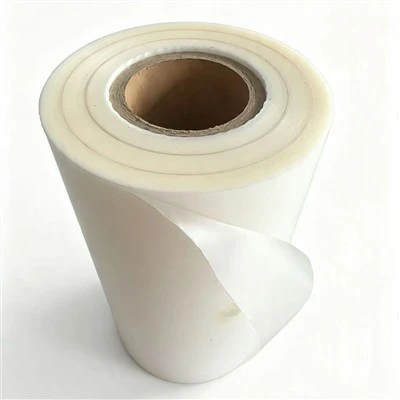
First off, let’s get one thing straight: base, unmodified BOPET? It’s not exactly UV resistant. I know that sounds like a bummer, but hear me out. When PET is made into that biaxially-oriented film (meaning they stretch it both ways, length and width, to make it stronger, thinner, and clearer), its natural chemical structure is sensitive to ultraviolet light. UV rays are tiny, high-energy particles that bang into polymer chains and break them apart over time. For unmodified BOPET, that damage shows up pretty quickly if it’s left in direct sunlight – think weeks or a few months, not years. You’ll see it turn yellow, get brittle, crack, or lose that clear shine it’s known for. That’s why if you’ve ever used a cheap clear plastic bottle left out in your garage all summer, it gets that foggy, crumbly feel? That’s the same UV break-down happening.
But here’s the thing: almost all BOPET that’s made for commercial use these days – especially the stuff that’s meant to handle outdoor or high-sun environments – isn’t just plain PET. We add UV stabilizers. Full stop. I can’t tell you how many times a customer will come to me saying, “I need BOPET that lasts outside” and they don’t even realize there’s a difference between standard packaging BOPET and UV-stabilized BOPET. It’s like comparing a regular hoodie to one that’s treated for water resistance – same base material, totally different performance depending on the additives.
Let me explain how those stabilizers work, in plain English, no fancy chem jargon. UV stabilizers are little molecules we blend into the PET resin before we extrude it into film. There are two main types, basically: absorbers and blockers. Absorbers soak up the UV rays before they can hit the PET chains. Think of them like a sponge for sun – they take all that harmful energy and turn it into a tiny amount of harmless heat. Blockers, on the other hand, act like a mirror or a screen, bouncing UV rays away from the film altogether. The good stuff uses a mix of both, which is how you get that long-lasting UV protection. I’ve got a grade of BOPET we make that uses a combination of benzophenone and benzotriazole stabilizers, which is the sweet spot for outdoor use – it doesn’t mess with the film’s clarity or flexibility, either.
Now, let’s talk real-world numbers, because that’s what everyone cares about. When a customer asks “how long will it last?” I can’t just give a vague answer. It depends on the type of UV stabilizer, how much we add, and the actual conditions it’s exposed to. Like, if you’re putting BOPET on a sign that’s in Florida, where there’s tons of strong, direct sunlight and high humidity, it’s gonna degrade faster than if it’s on a fence in Seattle, where it’s cloudy more often. But with a properly formulated UV-stabilized BOPET, you’re looking at 2 to 5 years of outdoor UV exposure before you start to see noticeable fading or brittleness. Compare that to unmodified BOPET, which might only last a few months in that same Florida sun – that’s a huge difference.
Wait, but what about other performance properties that matter when UV resistance is on the table? I get asked that too, because people don’t want to trade UV protection for something else. For example, some stabilizers can leave a film cloudy or make it less flexible, right? But the good ones – the ones we use – don’t do that. Our UV-stabilized BOPET is just as clear, just as tear-resistant, and works the same as standard BOPET for things like printing, laminating, or coating. We test every batch too – we put samples in a QUV chamber, which simulates years of UV exposure in just a few days, so we can make sure it’s holding up. Last quarter, we had a customer who needed BOPET for solar panel backsheets – that’s a big one, because solar panels are outside 24/7, exposed to sunlight, rain, and temperature swings. They came to us because another supplier’s film was cracking after 18 months, and our UV-stabilized grade has been performing great for their 3-year warranty projects.
Another big use case is flexible packaging for outdoor goods. Like, think about the packaging for camping gear, sun care products, or pet food that’s sold in places with lots of sunlight – grocery store displays, for example. If the packaging fades, consumers don’t trust the product, right? So a lot of brands switch to UV-stabilized BOPET for that. I had a hiking gear client last year who switched from printed LDPE bags to our UV BOPET because their old packaging was fading on outdoor store shelves in just 6 months. With our stuff, it’s still bright and clear after over a year, even in direct store lighting.
But hold on, let’s not make it sound like all BOPET with stabilizers is the same. There’s a big difference between custom-formulated UV BOPET and something that just has a tiny amount of stabilizer added to check a box. I’ve seen cheap knockoff UV BOPET that’s basically regular film with a dusting of stabilizer – it might pass a quick test, but it starts breaking down after 6 months in real sun. That’s why it’s important to know your supplier, and ask for test data. Anyone can say their BOPET is UV resistant, but if they don’t have QUV test results or real-world performance data, it’s probably not worth the money.
Also, there’s something called UV blocking BOPET that’s different from just UV resistant – wait, let’s clarify that, because people mix those terms up. UV resistant means the film can resist degradation when exposed to UV, so it doesn’t break down or get damaged. UV blocking means it actually blocks UV rays from passing through it. Our UV-stabilized BOPET does both, actually, which is why it’s so versatile. For example, if you’re using it for food packaging that needs to block UV to keep vitamins or flavors from breaking down, that’s perfect. If you’re using it for a greenhouse film, it blocks harmful UV while letting in the good light plants need. Same film, different use.
Wait, let’s address a common misconception I hear all the time: “If I just add a UV coating to regular BOPET, that works too, right?” Yeah, sometimes, but coatings have their own problems. Coatings can peel or scratch off over time, especially if the film is being bent or rubbed. The stabilizers we add to the resin are mixed all the way through the film, so they don’t wear off – no matter how much the film is handled, stretched, or laminated, the UV protection stays. That’s a huge benefit of in-line stabilization vs. top coatings. I always tell customers to think about that – a coating might be cheaper upfront, but if it fails in a year, you’re replacing it. The stabilized resin is a longer-term investment that saves you money down the line.
Now, what about indoor use? If you’re using BOPET for things like labels, food packaging, or decorative films inside, do you need UV stabilizers? Probably not. Indoor lighting has way less UV than sunlight, so regular BOPET will last basically forever indoors. That’s why most of the standard BOPET we make goes to packaging for indoor products, like cereal boxes or snack bags, where sun exposure is minimal. The UV-stabilized stuff is for when it’s going to be outside, or near a lot of strong indoor light, like museum displays or storefront signs.
Let’s talk about some common mistakes I see customers making when choosing BOPET for UV use. First, not specifying the grade. They’ll order “BOPET” and get standard packaging grade, which isn’t UV resistant. Second, not asking for test data. I don’t get mad when customers ask for QUV test results – I send them without hesitation, because I know our product works. Third, not considering the full environment. Like, if the film is going to be in a hot climate, UV rays are stronger, so you need a higher concentration of stabilizer. If it’s going to be near saltwater, like a boat part, you need stabilizers that also resist moisture, which some grades have.
Last year, we had a customer who was using BOPET for boat covers – they needed something that could handle salt spray, direct sun, and being folded up all the time. They tried a generic UV BOPET, and after 8 months, it was brittle and cracking because it didn’t have the right stabilizer for salt exposure. We switched them to our marine-grade UV BOPET, which has extra stabilizers that resist both salt and high heat, and they haven’t had a problem since. That’s the kind of thing that makes all the difference – it’s not just “UV resistant,” it’s UV resistant for your specific application.
So to circle back to the original question: Is BOPET UV resistant? The short answer is: base BOPET isn’t, but properly formulated, UV-stabilized BOPET absolutely is, and it’s one of the most reliable options for outdoor flexible films, solar applications, and anything that needs to hold up to sun exposure.
I’ve been in this business long enough to know that choosing the right BOPET isn’t just about picking the cheapest roll off the shelf. It’s about understanding what your project needs, and matching that to the right grade. If you’re working on something that’s going to be outside, or exposed to strong UV light, don’t settle for generic BOPET. Our UV-stabilized BOPET is tested, proven, and works for everything from solar backsheets to outdoor signage to protective gear packaging.
If you’re not sure which grade is right for your project, or you want to talk about specs, test data, or getting a sample, just reach out. I’d be happy to chat through your needs and help you find the perfect BOPET for your job. No sales pitch, no jargon – just real talk about what works, based on years of seeing what fails and what lasts.
Biaxially-Oriented Polyethylene Terephthalate References:
- Paci, M., & La Rosa, A. (2005). Weathering of polyethyleneterephthalate (PET) films: Effects of UV radiation and temperature on mechanical properties and chemical structure. Polymer Degradation and Stability, 87(3), 475-483.
- Crawford, R. J., & Hardy, B. (2010). Plastic Films: Technology and Applications. Elsevier.
- Guo, J., et al. (2018). Progress in UV-stabilized polymer films for outdoor applications. Journal of Applied Polymer Science, 135(24), 46278.
Qingzhou Huiyuan Packaging Materials Co., Ltd.
As one of the most professional biaxially-oriented polyethylene terephthalate suppliers in China since 1997, we’re featured by quality products and good service. Please feel free to buy cheap biaxially-oriented polyethylene terephthalate made in China here from our factory. For price consultation, contact us.
Address: Naoshan Industrial Park, Shaozhuang Town, Qingzhou City, Weifang, Shandong Province, China.
E-mail: 15864598133@163.com
WebSite: https://www.huiyuanfilms.com/
