If you’ve been scrolling for cooling system parts lately, you’ve probably seen Hump Silicone Hoses pop up in parts lists, online shops, even mechanic forums. As someone who’s been supplying these hoses for years, I get the question all the time: Can I actually use my hump silicone hose for radiator work? It’s not a random question—radiator hoses work way harder than most people give them credit for, and skimping on the right part leads to overheating, coolant leaks, even total engine damage. Let’s break this down like we’re chatting in my warehouse shop, no stuffy engineering jargon that makes your eyes glaze over. Hump Silicone Hose
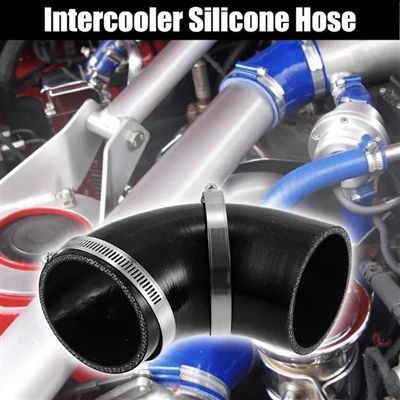
First, let’s get on the same page: what even is a hump silicone hose, vs. a straight radiator hose? A straight radiator hose is just a smooth, bendy tube—designed to connect two rigid, straight radiator inlet/outlet ports. Hump hoses (sometimes called molded hoses, but we call ‘em humps ‘cause the curved sections are their whole thing) have those bulges, bends, or curved sections molded right into them. They’re made for tight spaces where a straight hose would have to bend too much or create sharp angles that cause kinks. Think of it like how a curved garden hose fits around a faucet: no extra clamps or adapters needed, no stress on the hose when it’s installed.
Now, the big question: is this good for radiators? Short answer: it depends, but a lot of the time, yes—if you pick the right one. Let’s start with why silicone is better than the old-school rubber hoses you grew up with. Silicone can handle way higher temps. Most regular radiator rubber hoses start breaking down at around 220°F; silicone holds up to 350°F, even short bursts up to 400°F. That’s non-negotiable for radiators, ‘cause engine coolant temps can jump fast when you’re hauling heavy stuff, sitting in traffic, or towing up a hill. Silicone is also way more resistant to coolant corrosion, ozone, and the little chemical sneezes that coolant picks up over time—no more cracking after two years like those cheap rubber hoses.
But wait, radiators have specific needs straight off the bat. They’re under constant pressure, right? The cooling system runs at like 13-15 PSI (pounds per square inch) for most stock cars, and up to 20 PSI for performance builds. Good hump silicone hoses are reinforced with multiple layers of fiberglass and polyester, so they don’t bulge or blow out under that pressure. That’s way better than non-reinforced straight silicone hoses, which are mostly for vacuum lines, not cooling systems. As a supplier, I only stock hump hoses with at least 2 plies of reinforcement ‘cause I’ve seen what happens when folks grab the wrong one—one of my regulars learned that the hard way last year, tried to use a cheap non-reinforced hump hose on his truck radiator, blew it out on a long drive, stranded him 30 miles from home. Ouch.
Now, the caveats. You can’t just grab any hump silicone hose and toss it on your radiator. First, size matters. Straight radiator hoses come in specific inner diameters (ID) to match your radiator port and engine block port. If your radiator outlet is 1.5 inches, your hump hose has to be 1.5 inches ID—too small, and you restrict coolant flow, leading to overheating; too big, and the hose slips, leaks, or collapses under suction. I always tell customers to grab a tape measure, get the exact ID of both ends of their radiator hose (and the port on the engine, while they’re at it) before ordering a hump one. Don’t guess—last month someone ordered a 1.75 inch ‘cause their old rubber felt “that size,” and it was 1.625, so it leaked nonstop until he swapped it.
Second, the location. Radiators have two main connections: the upper hose connects the top of the radiator to the engine’s thermostat housing, and the lower hose connects the bottom to the water pump. The upper hose gets hot, has to handle some heat expansion, and often has to bend around the radiator’s mounting brackets. A hump hose works here perfectly—its molded bends fit exactly where you need to go, no fancy routing. The lower hose? It’s under more suction pressure (the water pump pulls coolant through it), so a reinforced hump hose is even better here. But wait—some radiators have super tight turns right at the port, where a straight hose would have to make a sharp 90-degree bend that kinks. A hump hose’s pre-molded curve eliminates that kink, which is a huge win. That said, don’t use a hump hose for every radiator part—like, the heater core hoses are smaller, but if you get a low-pressure hump hose for that, it’s fine. Stick to the main radiator hoses for the hump ones.
What about performance builds? If you’re modding your car, upping your horsepower, or towing heavy, hump silicone hoses are actually ideal. Performance cooling systems often run higher pressure (up to 25 PSI) and higher temps, and the molded design lets you route the hose to avoid hot spots, exhaust pipes, or other engine parts that would rub on a straight hose and cause a leak. I work with a lot of tuners who switch all their cooling hoses to hump silicone ‘cause it cuts down on installation time—no custom bending, no adapters, just a straight bolt-on (well, clamp-on) part.
Wait, but what about common myths? Let’s bust one right now: “Hump hoses are too flexible for radiators.” No, not the good ones. Reinforced hump hoses are stiff enough to not fold over when installed, but flexible enough to fit your engine’s layout. The cheap, no-name hump hoses from Amazon? Those are garbage, mostly for air intake, not cooling. I see people mix those up all the time. Another myth: “All silicone hoses are the same.” Nope. We test every batch of our hump silicone hoses for pressure and temp before they leave the warehouse. The cheap ones get duds all the time—one batch I tested last year could only handle 180°F, way too low for radiator work. That’s why it’s worth going with a supplier that specifies their hoses are “cooling system rated” not just “silicone.”
Another thing: installation. When you put a hump silicone hose on a radiator, don’t just tighten the clamps like you would on a rubber hose. Silicone doesn’t have that same give as rubber, so you need to make sure the clamp is 100% seated on the hose, not just the end. I always tell folks to use stainless steel clamps (not the cheap zinc ones that rust) and to slide the hose all the way onto the port until it hits the stop, then clamp. For hump sections, make sure the hose isn’t twisted when you install it—twisting a reinforced hump hose can weaken the layers, leading to a blowout down the line. I’ve had a customer bring back a hose he installed twisted, and sure enough, it split after a week. Small mistake, big problem.
What about lifespan? A good hump silicone radiator hose will last 5-10 years, way longer than the 2-4 years you get with standard rubber hoses. I’ve got a customer who’s had our hump hoses on his work truck for 7 years, and he only changed ‘cause he was upgrading his radiator, not ‘cause they leaked or cracked. That’s a huge plus for folks who don’t want to be under the hood every other year replacing hoses.
Now, when should you NOT use a hump silicone hose for a radiator? Let’s be real, no product is perfect. If your radiator has really short ports—like, less than an inch of space between the port and a metal bracket that the hose would rub against—a hump hose might not fit, ‘cause its molded curve adds extra length. In that case, a straight silicone hose is better. Or if you’re on a super tight budget, a cheap rubber straight hose is better than a wrong hump hose, ‘cause a bad fit is worse than a slightly less durable part. But for most people, the right hump silicone hose is a solid choice.
As a supplier, I see all the mistakes people make when picking cooling hoses. That’s why I make sure every product I sell has clear specs: inner diameter, pressure rating, temp range, and exactly what it’s for. No guessing, no fine print. I also have a team that helps people pick the right one—last week, a guy came to me with a 2008 Honda Civic, wasn’t sure if a 1.5 inch hump hose would fit, I pulled up the exact specs for his car, and he ordered the right one, no returns. That’s the stuff that matters, not just selling a part, but making sure it works for your build.
At the end of the day, using a hump silicone hose for a radiator works, as long as you get the right one: reinforced, cooling-system rated, matched to your exact port size, and installed correctly. It’s way better than old rubber hoses for heat, pressure, and lifespan, and the molded design makes installation way easier than fighting with a straight hose that has to bend around every part of your engine.
If you’re looking to upgrade your radiator hoses, or just have questions about what fits your car, hit me up. We’ve got a range of hump silicone hoses for stock cars, performance builds, trucks, even classic cars, and we can help you pick the right fit to avoid leaks, overheating, and that hassle of being stranded on the side of the road. Let’s chat and get you sorted with a part that works, not just a part that says “silicone.”
Brake Hose References
- Society of Automotive Engineers (SAE) Standard J200, “Performance Standard for Rubber Hoses for Automotive Cooling Systems”
- Dow Corning Corporation, “Silicone Elastomers for Automotive Cooling Applications”
- Automotive Research Council (ARC), “Cooling System Component Lifespan and Failure Analysis”
- Gates Corporation, “Automotive Cooling Hose Pressure and Temperature Ratings Guidelines”
- International Organization for Standardization (ISO) Standard 188, “Plastics – Determination of long-term ageing characteristics”
Ningbo Haidu Auto Parts Co., Ltd.
As one of the most professional hump silicone hose manufacturers and suppliers in China, we’re featured by cheap products and good service. Please rest assured to buy durable hump silicone hose at competitive price from our factory. Also, OEM service is available.
Address: No21 zhoujialupeng,Zhushan Village,Lizhousub-district Yuyao City.Ningbo City,Zhejiang Province
E-mail: sale6@cnsiliconehose.com
WebSite: https://www.cnsiliconehose.com/
