If you’re a bakery manager, confectionery line supervisor, or small-batch cream product owner, you’ve probably felt the slow burn of unexpected downtime on your cream filling line. A machine that misfills, leaks, or stops mid-production doesn’t just cost you batches—It costs you: missed delivery windows, wasted raw cream (which doesn’t come cheap, especially for specialty flavored or organic options), and the kind of last-minute scrambles that make your whole team pull all-nighters. That’s why I’ll cut to the chase today: a consistent, documented maintenance schedule for your cream filling machine isn’t just a nice-to-have—it’s the backbone of a reliable, profitable production line. As a cream filling machine supplier with over 12 years working with everything from artisanal cookie shops to mid-sized cereal bar factories, I’ve seen firsthand how skipping a single maintenance step can derail a month of consistent output, while a well-kept machine runs 20-30% longer with fewer costly repairs. Cream Filling Machine

First, let’s ground this: cream filling machines aren’t one-size-fits-all, but their core maintenance cycles map to how often the machine is used, the type of cream (light, thick, stabilized, or organic), and the environment it operates in. The schedule I’ll break down below is tailored to standard volumetric cream filling machines—think the ones that pump and portion pastry cream, whipped cream, or ganache into pastries, cupcakes, or snack bars—because that’s the line we’ve optimized at our shop.
Let’s start with the most frequent check, because small, regular issues hide in plain sight and turn big fast: daily maintenance. This isn’t a 2-hour deep clean—it’s a 15-minute end-of-shift routine that keeps tomorrow’s run smooth. Step one is always disconnecting the machine from power and compressed air before touching any parts—you’d be surprised how many people skip this and fumble with a running nozzle. Next, you take apart the fill head nozzle: cream (even stabilized) sets in narrow crevices, and a partial clog from one shift can turn into a full blockage that ruins 50+ portions the next. I recommend using a soft, food-grade nylon brush (never metal, which scratches nozzle walls and harbors bacteria) and warm, mild dish soap to scrub every inch inside the nozzle, then rinsing thoroughly.
While the nozzle is off, check the fit: a loose or bent nozzle won’t sit flush with a pastry liner, leading to messy overflows that get wiped onto the machine’s frame. If you spot a small bend, a quick adjustment with a pair of pliers (only on the nozzle’s outer edge—never the inner diameter, which controls portion size) fixes most issues. Then, move to the pump chamber: this is where the cream is pulled in and pressurized for filling, and leftover cream here can sour over time, especially with organic or fruit-flavored creams. Use a food-grade sanitizer to wipe the interior of the pump, then run a small amount of warm water through the system to flush any remaining residue. Finally, do a quick visual check of the machine’s connections: hoses that carry compressed air or cream, bolts that secure the fill head, and the control panel’s buttons. A loose air hose can cause inconsistent pressure, which leads to lopsided fills, so even a quick twist tight makes a difference. I also remind every customer I train to log one quick note each day: “Nozzle had a slight clog” or “Hose felt a little loose” keeps a trail of small issues instead of discovering a $500 pump failure out of the blue.
Next, moving up to weekly maintenance. This is a more detailed routine, designed to catch wear that daily checks miss, and it takes about 45 minutes once your team is familiar with it. Start with a full deep clean of all food-contact parts: not just the nozzle and pump, but the feed hose that connects the cream storage tank to the fill machine, and the mixing impeller (if your machine has one) that keeps cream from separating. For hardened cream residue that’s too thick for soap and a brush, use a food-grade enzyme cleaner—enzymes break down dairy proteins without scratching surfaces, unlike harsh abrasives. After cleaning, do a leak test: fill the machine with a small batch of water (or sanitizer) and run it through 10-15 portions to check for drips from the nozzle, gaps in the fill head, or seepage around the pump. Even a single drip per portion can add up to 100+ wasted portions a week, which for a high-volume line is hundreds of dollars in raw cream cost.
The weekly check also includes looking at mechanical parts that don’t touch food, but keep the machine running. If your machine uses a belt drive to power the pump, check for fraying or stretching: a loose belt will cause inconsistent flow, so a quick adjustment (or replacement if it’s worn) prevents halftime stops. If your machine has sensors that detect missing pastry liners or cups, clean the lens with a lint-free, food-safe cloth—dust and cream splatter on sensors are one of the top causes of “false stops” that make your line idle for 5 minutes every hour. Finally, lubricate moving parts that aren’t in contact with food: the pivot for the fill head, the slide for the nozzle adjustment, and any other metal parts that rub together. I always specify non-food-grade lubricant here—food-grade isn’t necessary for parts that don’t touch cream, and it can leave a sticky residue that attracts dust. Just wipe away any excess lubricant so it doesn’t accidentally get brushed onto food-contact parts later.
Now, the big one: monthly maintenance. This is the semi-technical routine that most small production teams shy away from, but it’s the one that prevents the majority of major breakdowns. I make a point to tell customers that you don’t need a mechanical engineer for this—just a basic tool kit and a few hours a month. First, inspect the entire pump assembly: remove the pump cover, check the impeller and housing for wear, and measure the clearance between the impeller and housing. If the clearance is more than 0.5mm (about the thickness of a credit card), that means the pump is losing pressure, and portion sizes will start to vary. Replacing a worn impeller or housing is a $75 part (far cheaper than a $1,500 pump replacement mid-batch) and takes less than 20 minutes.
Next, calibrate the machine’s portion settings. Even if you didn’t change anything, small changes in pump pressure or hose width can throw off portion sizes by 5-10% over a month, which might seem small but adds up. To calibrate, set the machine to your desired fill volume (say, 25g per portion), run 10 portions, and weigh them one by one. If the average is off by more than 1g, adjust the pump flow rate or the time the nozzle is open until you hit the exact weight. This isn’t just about reducing waste—it’s about compliance: if you sell products with specific portion sizes, being consistently off can lead to labeling violations or customer complaints.
The monthly check also includes testing the machine’s safety features. Cream filling machines use high pressure and moving parts, so emergency stop buttons, pressure relief valves, and door interlocks (which shut off the machine if a cover is open) need to work every time. Press the emergency stop button a few times to make sure it cuts power immediately, and test the pressure relief valve by running a batch at high pressure—if it doesn’t release extra pressure, it’s a fire hazard for your machine and a safety risk for your team. I always tell customers to mark these checks on their calendar: it’s easy to forget a safety feature until it fails.
Then, the quarterly and semi-annual maintenance, which I break down for teams that run machines 8+ hours a day, 6 days a week. Quarterly is focused on more in-depth mechanical checks: for example, replacing the air filter on pneumatic cream filling machines—clogged air filters cause inconsistent pressure, which leads to uneven fills. We recommend replacing this every 3 months, or more often if your production environment is dusty (like a bakery with flour in the air). For semi-annual maintenance, that’s when we recommend checking the wiring and control panel, and if your machine has a gearbox, changing the gear oil. If you’re not comfortable opening the control panel, that’s a perfect time to call a technician from your cream filling machine supplier: we can come on-site (or walk you through it remotely) to check for loose wires or corrosion, which can cause the machine to shut down unexpectedly.
Wait, let’s talk about a common mistake I see all the time: one-size-fits-all scheduling. If you run a small operation that uses the machine 2 hours a day to fill cupcakes for a local café, you don’t need the same schedule as a factory that runs 12 hours a day 6 days a week. We adjust the schedule for our customers: for low-volume lines, you can stretch weekly checks to every 2 weeks, and monthly checks to every 6 weeks. But for high-volume lines, we emphasize not skipping even a daily step—because a single breakdown costs more than a year of maintenance supplies.
Another point: cleaning standards aren’t just about machine life—they’re about food safety. Cream is a high-moisture, high-protein food, so leftover residue can grow bacteria if not cleaned regularly. I’ve had customers come to us after a month of skipping nozzle cleaning, and they found mold growing inside the fill head—something that would ruin entire batches and lead to costly product recalls. So every step in this schedule isn’t just for keeping the machine running; it’s for keeping your products safe to sell.
Let me add a quick note on parts: when you do need to replace a nozzle, hose, or impeller, always use OEM parts (Original Equipment Manufacturer) from your cream filling machine supplier, not generic ones. Generic nozzles might fit, but they often have a slightly different inner diameter, which throws off portion sizes by up to 15%. We’ve had a customer who tried a cheaper nozzle from a hardware store, and they ended up wasting $2,000 in cream over 2 weeks before they switched back to our OEM parts.
Now, let’s wrap this up: the key to a maintenance schedule is consistency, not perfection. You don’t need a fancy binder with 50 pages of rules—just a simple checklist you post right next to the machine, so your team can tick off each step after every shift. If you’re not sure where to start, or if you have a machine that’s older and you’re not sure how to adjust the schedule for it, that’s where we come in. Our team works with cream product makers of all sizes to build custom maintenance plans that fit their line, train their team on proper cleaning and checks, and have replacement parts ready to go so downtime is as short as possible.
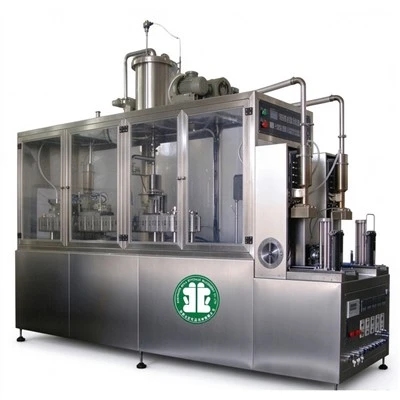
If you’re tired of unexpected breakdowns, wasted cream, and last-minute production scrambles, we can walk you through building a maintenance schedule tailored to your specific cream filling machine and operation. Connect with us to discuss your needs and get started on a plan that will keep your line running smoothly for years to come.
Gable Top Lotion Filling Machines References:
- Food and Drug Administration (FDA). (2022). Grade A Pasteurized Milk Ordinance: Equipment Sanitation Standards for Dairy Processing. U.S. Department of Health and Human Services.
- National Confectioners Association. (2021). Maintenance Guidelines for Commercial Cream Filling and Depositing Equipment. NCA Technical Manual Series.
- Machinery Lubrication Magazine. (2020). Best Practices for Food-Grade and Non-Food-Grade Lubrication of Processing Equipment. Industrial Lubrication Association.
- International Society of Beverage Technologists. (2019). Preventive Maintenance Schedules for Volumetric Filling Machines in High-Moisture Food Production. ISBT Technical Report 12-19.
Shenyang Beiya Beverage Machinery Co., Ltd.
With abundant experience, we are one of the most professional cream filling machine manufacturers and suppliers in China. If you’re going to buy customized cream filling machine made in China, welcome to get quotation from our factory. For price consultation, contact us.
Address: No.2-1, Tongling Street, Yuhong District, Shenyang City, Liaoning Province, China
E-mail: market@sybeiya.com
WebSite: https://www.chinafilling.com/
