What’s the best air preparation unit for pneumatic cylinders? If you’ve ever messed around with pneumatic systems, you know this isn’t a one-size-fits-all question. I’ve been selling air prep units for like 8 years now, and let me tell you—90% of the headaches customers bring me boil down to skipping this step, or grabbing the wrong unit. Pneumatic cylinders are workhorses in everything from factory assembly lines to small woodshops, but they’re total divas when it comes to air quality. Skip the right prep unit, and you’re looking at sticky cylinders, stuck valves, broken seals, and way more downtime than you want. Today I’m breaking down what actually works, no sales fluff, just real talk from someone who’s seen every mistake in the book. Air Preparation Units
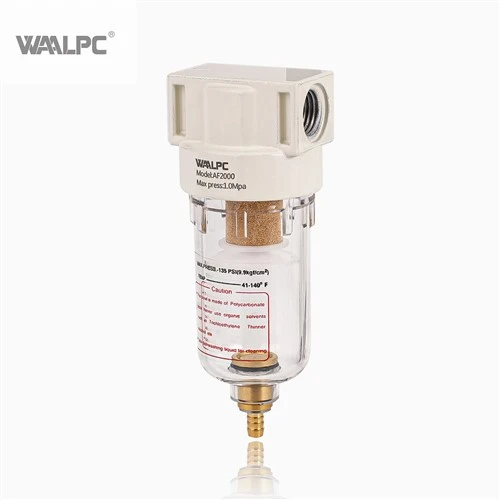
First, let’s get one thing straight: air prep units aren’t just fancy filters. They’re a three-part team that does three non-negotiable jobs. First, they filter out gunk that’s floating in your compressed air. Second, they dry the air so there’s no water ruining your parts. Third, they regulate the pressure so it’s not spiking and blowing out seals. If you grab a unit that only does one of these, you’re setting yourself up for failure. I see this all the time—guys pick a cheap single filter because it’s the cheapest option, then call me a week later saying their cylinders are acting up. Let’s start with why each part matters, because that’s how you figure out what you actually need.
Let’s talk about the biggest enemy of pneumatic cylinders: water. Compressed air is like a sponge—when you squeeze air, moisture gets concentrated, especially if your compressor is sitting in a damp shop or running hot. That water doesn’t just make metal rust inside your cylinders—it mixes with compressor oil to make a gunk that sticks to cylinder walls, making them stick instead of moving smoothly. In cold weather, that water turns to ice, and if there’s a tiny line, it freezes and splits. I had a customer last winter who was running a packaging line with pneumatic cylinders for sealing boxes—his line went down for 12 hours because water froze in his lines. He was using a super cheap unit that only had a paper filter, no dryer, and that’s why it failed.
Next up: particulates. Your compressor is spewing tiny metal shavings, dirt, and even compressor oil mist all day. Paper filters can catch big chunks, but the tiny stuff—like 0.01 microns? That’s what gets past those and wears down cylinder seals. Seals are cheap to replace, but if they wear down because of bad air, your whole cylinder fails, and that’s way more expensive. I had a small manufacturing client who had to replace 8 cylinders in a month because they skipped a proper particulate filter. That’s $1,200 in parts alone, plus downtime—way more than a good air prep unit costs.
Then there’s pressure regulation. Pneumatic cylinders are rated for a specific PSI. If your compressor is pumping 150 PSI, and you don’t regulate it down to the cylinder’s 80-100 PSI, you’re overpressurizing it. That blows out seals, makes the cylinder move too fast, and can even break the whole unit. I see this with guys who just hook up their compressor and go—no pressure regulator, so spikes happen all day. A good pressure regulator keeps it steady, so your cylinders run at the right speed and pressure every single time.
Okay, so now we know the three core parts: filter, regulator, and dryer. But wait, what kind of dryer? Not all dryers are the same. I get asked all the time: “Should I get a refrigerated dryer or a desiccant dryer?” Let’s break that down for different setups.
If you’ve got a small system—like a woodshop, or a small assembly line with 2-3 cylinders—refrigerated dryers are perfect. They’re cheap, compact, and they cool the air to around 38-40 degrees F, which drops most of the water out. That’s enough for 90% of small to medium setups. The only downside? If you live in a super humid area, or run a system 24/7, you might get a little extra moisture, but for most people, refrigerated is the way to go. I sell way more of these than desiccant, because they’re lower maintenance and don’t need replacing as often.
Desiccant dryers are for bigger setups—like a factory running 20+ cylinders, or if you’re working in a super cold climate, or handling food/pharmaceuticals where moisture and oil can’t be present. Desiccant beads absorb the moisture, so they can get the air down to like -40 degrees F, which is way drier. But they’re more expensive, they need regular replacement of the desiccant beads, and they’re bigger. You don’t need this for a 3-cylinder line, save the cash for something else.
Now, the filter part. This is where people mess up the most. There’s particulate filters, coalescing filters, and oil removal filters. Let’s keep it simple: if you’ve got standard pneumatic cylinders (the ones used in assembly lines, packaging, woodshop), you need a particulate filter that catches 5 microns and bigger. That’s enough to stop the big gunk and metal shavings. If you’re worried about oil mist, get a coalescing filter that catches 0.01 microns, but for most small to medium setups, the standard particulate filter is fine. Don’t overfilter—you’ll just add unnecessary cost and pressure drop, which makes your cylinders slow down.
Regulators: get a diaphragm-type regulator, not a spring-and-piston one. Diaphragm regulators are way more accurate, keep pressure steady even if your compressor has fluctuations, and last longer. Spring-and-piston ones are cheaper, but they drift, so your pressure goes up and down, which is bad for your cylinders. I learned this the hard way when I had a customer who swapped to a cheap piston regulator, and his cylinders were jerky—swapped it for a diaphragm one, and it ran smooth again.
Now, let’s get to the big question: is it better to get a modular unit or a combined one? Modular units are like Legos—you buy the filter, regulator, dryer separately and mount them next to each other. Combined units are all three in one box. Which is better? It depends. If you’re working with a small, tight space, combined is great—less to mount, fewer connections, fewer leaks. But if you need to service parts easily, modular is better. If your filter gets dirty, you can just swap the filter without messing with the regulator and dryer. If the dryer needs replacing, you take that part off, leave the others. I lean modular for most people, because maintenance is way easier. I’ve had guys come back because their combined unit died, and they had to replace the whole thing, instead of just swapping one part. That’s a huge waste of cash.
Wait, but what about the size? Your air prep unit has to match your compressor’s CFM (cubic feet per minute) rating. If your compressor is 10 CFM, you don’t get a unit rated for 5 CFM—it’ll be too small, and you’ll get pressure drop. If it’s 20 CFM, you need a unit that can handle that. I see this all the time—guys grab a random unit off Amazon that’s not rated for their compressor, and it doesn’t do anything. CFM matching is non-negotiable. Check your compressor’s label, get the unit that’s rated for at least that CFM. If you’re running a big compressor for multiple lines, get a unit that can handle the peak CFM of all your cylinders combined.
Let me throw in a real example to make this concrete. Last year, a customer who runs a small auto parts assembly shop came to me. He had 12 pneumatic cylinders running his stamping and assembly lines, and they were failing every 2-3 months. He was using a super cheap single filter unit, no dryer, and a random regulator he found at a hardware store. We swapped him for a modular unit: a 10-micron particulate filter, a refrigerated dryer rated for his 15 CFM compressor, and a diaphragm pressure regulator, all matched to his CFM. What happened? His cylinder failures dropped to zero in 6 months. He saved like $800 in parts and downtime in those 6 months, plus he doesn’t have to replace parts every couple of months. That’s the value of getting the right unit, not the cheapest.
Another example: a woodshop customer. He runs a pneumatic cylinder for his panel saw, and he had it freeze last January when it was 10 degrees outside. He was using a tiny combined unit that only had a paper filter, no dryer. We swapped him for a modular unit with a refrigerated dryer (rated for his 5 CFM compressor) and a better particulate filter. He said he hasn’t had a freeze issue since, even when it’s 5 degrees outside. For a $150 unit, he saved way more than that in a new saw cylinder when he first had the freeze problem.
Now, what about common mistakes to avoid? Let’s list these, because they’re super important. First, skipping the drain. Air prep units have automatic or manual drains. Manual drains are fine if you check them every day, but if you forget, the water builds up and goes right through the unit to your cylinders. Automatic drains are worth the extra $20-$30, especially if you run the system all day and don’t have time to check drains. Second, not installing the unit close to the cylinders. If you put the unit at the compressor, and it’s 50 feet away, the air will pick up moisture from the lines, so the unit doesn’t do any good. Mount the air prep unit as close to the cylinders as possible—usually right at the line split for your pneumatic system. That way, the air stays clean and dry all the way to the cylinders. Third, buying the cheapest thing you can find. I’m not saying you need the most expensive unit, but the super cheap ones are usually low-quality filters, flimsy regulators, and dryers that don’t work right. You get what you pay for here. A good air prep unit will last 5-10 years, a cheap one will last 6 months. That’s a no-brainer.
Wait, but what if you have a really low-budget setup? Like a small hobbyist project with one pneumatic cylinder, not a big system. What do you get then? For a hobbyist, a combined filter-regulator unit is fine. You don’t need a dryer if you’re in a dry climate, or if you’re only running it occasionally. But if you’re running it regularly in a damp area, add a small inline dryer, not a whole big unit. I sell little inline desiccant dryers for hobbyists that work great for small setups. They’re like $30, way cheaper than a full unit. That’s the sweet spot for hobbyists.
Now, let’s wrap this up. The best air preparation unit for pneumatic cylinders isn’t a specific brand, it’s the unit that matches your setup. Let’s recap the steps to pick the right one: 1) Check your compressor’s CFM rating, get a unit rated for that. 2) Decide if you need a dryer: refrigerated for small/medium setups, desiccant for big or extra-dry-cold setups. 3) Pick a modular unit if you want easy maintenance, combined if you have tiny space. 4) Don’t skip the drain—get automatic if you can. 5) Install it close to your cylinders, not at the compressor.
I know it’s easy to brush off air prep as an afterthought, but trust me—this is the thing that keeps your pneumatic cylinders running, cuts downtime, saves you money on parts, and makes your whole system run smoother. I’ve seen way too many guys go the cheap route and end up paying way more in the long run. If you’re not sure what unit you need for your specific setup—whether you’ve got a small shop, a big factory, or a hobby project—reach out. We don’t do pushy sales, we just help you pick what works for you, no hidden fees, no weird fine print. Just real advice from someone who’s been doing this for years, seen every mistake, and wants you to avoid the headaches I’ve seen way too many people deal with.
Wait, before I go, one last thing: don’t forget to service your air prep unit. Change the filter every 6-12 months, drain the dryer regularly, check the regulator pressure every few months. Even the best unit won’t work if you don’t maintain it. That’s another thing people skip, and then they wonder why their cylinders are acting up. Small maintenance steps go a long way.
At the end of the day, pneumatic cylinders are reliable, but they’re only as good as the air you feed them. Pick the right air prep unit, and you’ll have smooth, trouble-free operation for years. If you’re not sure what you need, just connect with us to chat through your setup, no pressure, no hard sell.
Pneumatic Accessories References:
- Compressed Air and Gas Institute. (2018). Best Practices for Pneumatic System Air Quality and Component Longevity.
- Occupational Safety and Health Administration (OSHA). (2021). Compressed Air Safety and Maintenance Guidelines for Industrial Pneumatic Systems.
- Parker Hannifin Corporation. (2020). Pneumatic Component Selection and Maintenance Handbook for Industrial Applications.
- Flow Control Association. (2019). Guide to Air Preparation Unit Sizing and Installation for Pneumatic Cylinder Systems.
- Ingersoll Rand. (2022). Compressed Air Dryer and Filter Selection for Industrial Pneumatic Equipment.
Hangzhou Evershine Pneumatic Import & Export Co., Ltd.
Hangzhou Evershine Pneumatic Import & Export Co., Ltd. is one of the most professional air preparation units manufacturers and suppliers in China, featured by high quality pneumatic components. Please rest assured to wholesale bulk durable air preparation units from our factory. Welcome to contact us for custom service and OEM service.
Address: Hengkun Smart Industrial Park, No.176, Golf Road, Yinhu Street, Fuyang District, Hangzhou City, Zhejiang Province, China 311400
E-mail: Felix@waalpc.com
WebSite: https://www.evspneu.com/
