If you’ve ever stood in a food and beverage, pharmaceutical, or biotech plant and watched a high-speed processing line grind to a sudden halt because of a “CIP non-compliance” flag, you know how real and expensive this issue is. As a CIP cleaning system supplier, I’ve spent the last 12 years on plant floors, troubleshooting everything from a brewery’s fermenter line that turned batch after batch of IPA sour because of leftover yeast buildup, to a biotech client that failed a FDA inspection over incorrect CIP temperature logging. That experience has taught me that CIP compliance with GMP isn’t just a box to check for auditors—it’s the difference between safe products, wasted inventory, and avoided regulatory penalties. CIP Cleaning System
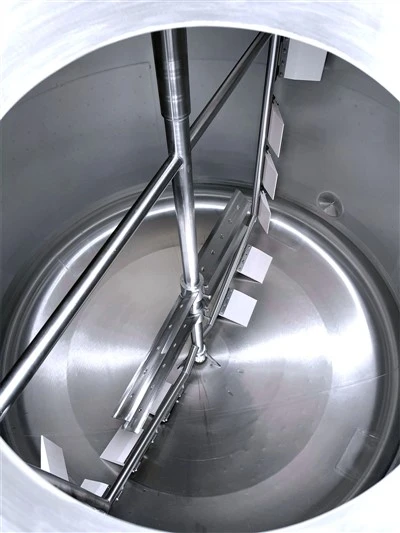
First, let’s break down what each part of that phrase actually means. CIP stands for Clean-in-Place, the automated process of cleaning process equipment (think tanks, pipes, valves, heat exchangers) without taking them apart. GMP, or Good Manufacturing Practice, is the set of regulations enforced by bodies like the FDA, EU EMA, and national health agencies that outline the minimum standards for ensuring products are consistently safe, pure, and effective. So CIP compliance with GMP is simply making sure your automated cleaning process meets all the rules set by GMP to prevent cross-contamination, eliminate microbial growth, and ensure every bit of product residue is removed from equipment between runs.
A lot of plant operators I talk to mix up “cleaning” and “sanitizing” with “compliance.” They’ll say, “Our line looks spotless after CIP, so we’re good.” But GMP doesn’t care about looks—it cares about data and consistency. I once worked with a contract drug manufacturer that had a spotless stainless steel mixing tank, but their CIP program was running at a temperature 12 degrees below GMP’s required 80°C for pharmaceutical-grade equipment. They’d always tested for surface cleanliness and passed, but they missed a key point: those tests only measure visible residue or a small swab sample. The dead zone at the base of the tank, where the agitator can’t reach, had a biofilm of bacteria that wasn’t picked up in spot testing. The FDA caught that during an inspection, and they had to recall a batch of topical creams. That’s the kind of avoidable mistake that happens when you confuse “clean on sight” with CIP compliance.
So what exactly does GMP require of a CIP system? Let’s get into the practical, on-the-ground details—not just the rulebook jargon. First, GMP mandates that every CIP process must be validated, meaning you have to prove, not just assume, that it works every single time. Validation isn’t a one-and-done task, either. A client of mine in the craft soda space tried cutting corners by using a generic CIP cycle from their equipment manufacturer, without adjusting it for their specific line of syrups and fruit purees. When they switched to a new fruit puree with higher sugar content, the old cycle couldn’t dissolve the caramelized sugar residue, leading to mold growth in their pipework. They failed a state health inspection and lost three months of production while re-validating their CIP program. Validation requires testing for multiple variables: different products, different equipment parts, even different water quality. That means running the same CIP cycle 10 to 20 times, testing for microbial count, residual product, and pH levels after each run, and documenting every single result. GMP audits don’t ask for your best run—they ask for all your runs, especially the outliers.
Next, GMP requires full traceability of every CIP step. You can’t just hit a button and call it a day. Every parameter of the CIP process has to be tracked, logged, and stored for a set period (usually 1 to 5 years, depending on the industry). What parameters? Temperature, of course—too low and you don’t kill microbes, too high and you can damage equipment or waste chemicals. Flow rate is another big one: if your CIP solution isn’t moving fast enough (usually 1.5 to 3 meters per second for pipework), it won’t scrub residue off the walls. Concentration of cleaning agents, whether it’s caustic for protein residue, acid for mineral buildup, or sanitizer like chlorine dioxide, has to be within a strict range. And timing—you can’t run a caustic CIP for 10 minutes and call it done; GMP requires minimum contact time that varies by residue. I’ve seen plants where operators intentionally skipped a minute of CIP cycle to save 10 minutes per shift, only to have a batch of probiotics fail microbial testing. The traceability part means you can’t just log these numbers on a piece of paper anymore (though some small plants still do). Modern CIP systems have automated data logging that syncs with batch records, so you can pull up every CIP run for a specific product line, date, and even shift in 10 seconds. That’s not overkill—it’s exactly what GMP auditors look for.
Another often-overlooked GMP requirement for CIP is design suitability. GMP says that equipment must be designed so it can be properly cleaned, no hidden corners where residue can hide. I’ve seen plants try to retrofit a CIP system to an old pipe layout that had dead legs—sections of pipe that are capped off, with no flow through them during CIP. Those dead legs are a breeding ground for biofilm, and every GMP inspection report I’ve reviewed cites dead legs as a top CIP non-compliance issue. The solution isn’t always ripping out old pipe, though. As a CIP system supplier, we often work with plants to modify their existing CIP program to target dead legs—like adding short, periodic flush cycles just for those sections, or increasing flow rate to prevent stagnation. The key here is that your CIP system has to match the equipment it’s cleaning, not the other way around. GMP doesn’t allow you to adjust your cleaning process to fix bad equipment design; it requires your equipment to be cleanable in the first place.
Training is also a huge, underrated part of CIP compliance with GMP. A fancy automated CIP system won’t help if the operator hits the wrong cycle button, or doesn’t notice a failed temperature sensor because they never received formal GMP training. I once visited a large dairy plant where the night shift operator had been using a weekend CIP cycle for weekday production, because it ran faster and they could go home early. They didn’t realize the weekend cycle (used for deep cleaning after no production over two days) was not validated for daily runs. By the time they were caught, they’d had three positive Listeria tests on their cheese line. GMP requires that every person who interacts with CIP systems—operators, maintenance staff, quality control teams—be trained specifically on how their CIP program meets GMP requirements, and that training is documented and updated regularly. A lot of plants treat CIP training like a one-day onboarding checkbox, but I tell all my clients: if your team doesn’t understand why each CIP step matters, they’ll cut corners when no one is looking.
Now, let’s talk about the common pitfalls that lead to CIP non-compliance, because most of these are avoidable. The biggest one is assuming “once validated, always compliant.” GMP requires regular re-validation—usually every 6 to 12 months, or any time you change a product line, equipment layout, water source, or even cleaning agent. A pharmaceutical client I work with switched their caustic cleaning agent to a new, eco-friendly brand, and didn’t re-validate their CIP process for six months. When their next FDA audit rolled around, they discovered the new agent was less effective at removing a specific excipient residue, leading to trace levels of residue in their final drug product. That mistake cost them a $200,000 fine and a 2-month production shutdown. Another pitfall is ignoring CIP system maintenance. A faulty pressure sensor that makes the system think flow rate is correct, when it’s actually 50% too low, will lead to unseen residue buildup. We get at least three calls a month from plants that failed an inspection because they skipped a routine check of their CIP spray balls—ones that had become clogged with product residue, so the spray wasn’t reaching the full surface of the tank.
For plant operators, getting CIP compliance right doesn’t have to mean investing in an entirely new CIP system overnight. As a CIP system supplier, I work with everyone from small craft breweries to large biotech facilities, and I’ve seen that the best approach is to audit your current program first. Start by reviewing your existing CIP cycle data—are there periods where temperature or flow rate drops below GMP requirements? Are there parts of your equipment that consistently fail swab tests? Then, validate your CIP program for your specific products, don’t rely on generic cycles. Make sure you have a way to track every CIP step, either through automated logging or rigorous manual documentation. And most importantly, train your team on the “why” behind CIP, not just the “how.”
I’ve spent 12 years on plant floors, and I can tell you this: there’s no “safe enough” when it comes to CIP compliance with GMP. One non-compliant CIP run can ruin a batch of product, trigger a recall, or lead to regulatory penalties that put a plant out of business. The good news is that it’s entirely manageable, as long as you treat CIP not just as a cleaning process, but as a core part of your GMP quality system.
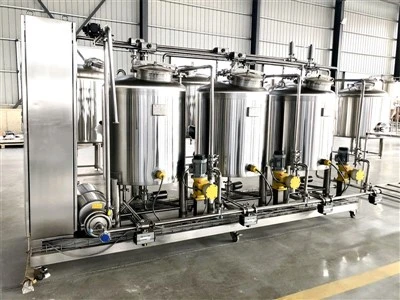
If your plant is struggling with CIP compliance, or you want to audit your current system to make sure it meets GMP requirements, we can help. Our team has worked with hundreds of facilities across food and beverage, pharmaceuticals, and biotech, to design, validate, and support CIP systems that are not just functional, but fully GMP-compliant. Reach out to our team to schedule a no-obligation review of your current process and learn how we can help you avoid compliance issues and keep your production running safely.
Dairy Mixing Tank References:
- U.S. Food and Drug Administration. (2023). Current Good Manufacturing Practice, Final Rule (21 CFR Part 210 and 211).
- European Medicines Agency. (2022). Annex 15: Qualification and Validation of GMP Requirements.
- International Society for Pharmaceutical Engineering. (2021). CIP Systems for Pharmaceutical Manufacturing: A Practical Guide.
- National Sanitation Foundation. (2020). CIP Compliance Standards for Food and Beverage Processing.
Shandong Chenma Machinery Co., Ltd.
Shandong Chenma Machinery Co., Ltd. is one of the most professional cip cleaning system manufacturers and suppliers in China. As we have world-leading production equipment and strong manufacturing capabilities, we warmly welcome you to buy high quality cip cleaning system made in China here from our factory. For price consultation, contact us.
Address: No.1666 Xinluo Street, Jinan City, Shandong
E-mail: admin@sdchenma.com
WebSite: https://www.chenmadairy.com/
