As a CNG standard station supplier, I get this question at least a dozen times a week: “Do CNG standard stations operate 24 hours a day?” It’s a fair one, too—for anyone who relies on compressed natural gas for heavy-duty trucks, fleet vehicles, or even personal commuter cars, the flexibility to fuel outside standard business hours can make or break a schedule. I’ve spent 12 years designing, installing, and maintaining CNG stations across North America, so I can tell you this isn’t a simple yes-or-no answer. It depends on a mix of regulatory rules, business needs, equipment design, and the unique priorities of each station’s operator. CNG Standard Station
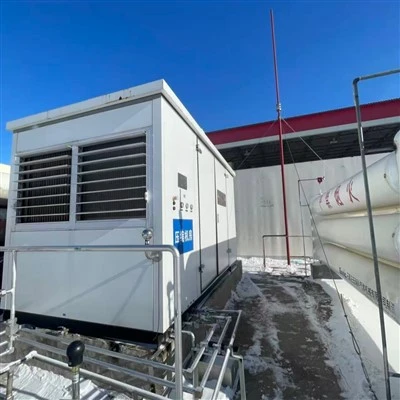
Let’s start with the core of how a CNG standard station works, because that’s where the 24-hour question gets rooted. A standard CNG station isn’t just a gas pump; it’s a network of high-pressure compressors, storage vessels, fueling dispensers, and safety controls that turn raw natural gas from a pipeline into the 3,000-PSI (or higher) fuel vehicles need. For a station to run continuously, every piece of that equipment has to be designed for round-the-clock use, and the operator has to account for two big constraints: maintenance and demand.
First, demand. Most CNG stations I’ve worked with see peak use during weekday morning and evening rush hours—6 a.m. to 9 a.m., and 4 p.m. to 7 p.m. That’s when delivery trucks, school buses, and commuter fleets are on the road, needing to top off before shifts or overnight. Off-peak hours, from 9 p.m. to 5 a.m., are often slow: a small station might only get 5 or 10 customers in that window, compared to 100+ during peak. For operators, running a station 24 hours a day means paying for compressor runtime, electricity, and labor for staff or remote monitoring even when demand is low. That’s why many smaller stations, or ones serving a localized fleet, operate on a “peak-only” schedule.
But here’s the part most people don’t see: modern CNG standard stations can be automated to run 24 hours a day without a full-time on-site attendant. I supply stations with remote monitoring systems that track compressor pressure, fueling events, and safety alarms in real time. If a customer pulls up to the pump at 2 a.m., the system validates their access (whether via a fleet card, app, or key fob), opens the dispenser, and stops automatically when their tank is full. No staff needed. The only time a human is involved is if there’s a safety alert—like a pressure fluctuation or equipment error—and those are rare with regular maintenance.
Then there’s regulation. In the U.S., CNG stations fall under the jurisdiction of the Pipeline and Hazardous Materials Safety Administration (PHMSA) and state-level fire codes. PHMSA doesn’t mandate that stations close at a certain time, but they do require that certain safety checks happen on a schedule. For example, compressors need a routine oil change every 500 operating hours, and storage vessels require hydrostatic testing every five years. These can’t be done while the station is operating, so operators have to schedule downtime—often overnight, when demand is low. That downtime is not a sign the station doesn’t run 24 hours; it’s part of maintaining a 24-hour operational lifespan.
A common misconception is that all CNG standard stations are the same. There are two main types: public access stations and private fleet stations. Private stations, owned and operated by a logistics company or municipal transit authority, almost always run 24 hours a day. Their entire business model relies on fueling their own vehicles around the clock—if a delivery truck breaks down waiting to fuel, that’s lost revenue. I installed a private station for a cross-country shipping firm in Ohio a few years back; their trucks run 24/7, so the station does too. We equipped it with two compressors, so if one needs maintenance, the other can keep running. That’s a key design choice suppliers like me make when building for round-the-clock use: redundant equipment to avoid full shutdowns.
Public access stations, on the other hand, are more varied. A station near a major interstate might run 24 hours because it caters to long-haul truckers who can’t wait for business hours. I worked on a station outside Indianapolis that’s open 24/7; its average customer is a truck driver coming off a 10-hour shift, needing to fuel and rest. That station’s electrical supply is sized for continuous use, and our design includes automated self-diagnostics that alert our service team before a compressor fails—so we can perform repairs during the rare lull, not during peak demand.
But not every public station can support 24-hour operation. Urban stations, for example, often face noise regulations. Compressors can run at 75 decibels, roughly the same as a busy street, and many residential areas restrict industrial noise after 10 p.m. or before 6 a.m. That’s why a CNG station in downtown Chicago I supplied operates from 6 a.m. to 10 p.m. We had to add sound barriers and variable-speed compressors that lower noise during off-peak hours, but even with that, the city wouldn’t let it run fully overnight. So it’s not a matter of the station’s equipment capability—it’s a matter of local rules and community input.
Another factor I talk to operators about is cost. Running a CNG compressor 24 hours a day uses about 1.5 kilowatt-hours of electricity per gallon of CNG produced. At off-peak times, electricity rates are often lower—so some operators stagger their maintenance and off-peak fueling to take advantage of cheaper power. That way, they’re not wasting energy, and they’re keeping the station running overnight without extra costs. I recently adjusted a station’s schedule in Texas to do this: they now run compressors at night, when power is 30% cheaper, and do routine maintenance during those same overnight hours. It’s a win—they get 24-hour operation, cut their energy bills, and follow PHMSA’s maintenance requirements.
I’ve also seen stations that call themselves “24-hour” but only offer self-service fueling, even if their compressors cycle off occasionally. The truth is, a well-designed CNG standard station can operate continuously for 10 to 15 years with proper maintenance, and most can run 24 hours a day as long as the operator plans for downtime and has the right equipment. The ones that don’t are usually either smaller stations with limited demand, or ones that haven’t invested in automation and redundant gear.
Let’s get back to the question you’re probably wondering: if you need a CNG station that runs around the clock, what do you need to look for? First, ask your supplier about equipment design. Does the station have a redundant compressor? Can the fueling system run without an attendant? Can it handle remote monitoring so you can address issues before they cause a shutdown? I’ve turned down projects where operators wanted a 24-hour station but had a budget that only covered a single compressor—because if that compressor breaks, the whole station stops. We build in redundancy because we know the cost of downtime for our customers is way higher than the cost of an extra piece of equipment.
I also tell new operators to test the station before committing to a full 24-hour schedule. When I install a new CNG standard station, I run it for a 72-hour trial period to check for pressure fluctuations, equipment wear, and power usage. That trial tells us if the station can handle continuous operation, or if it needs adjustments. A few years back, a small fleet operator in Michigan tried to run their new station 24 hours a day, but their initial setup had a small storage tank that couldn’t keep up with peak demand at night. We added a second storage vessel, and they’ve been running 24/7 ever since.
At the end of the day, the answer to “Do CNG standard stations operate 24 hours a day?” is: it depends on how you design and operate the station. As a supplier, I’ve built stations that run 24 hours a day, 365 days a year, and others that operate on a 12-hour schedule. The key is matching the station’s design to your needs: if you need continuous access, we build in the redundancy, automation, and safety systems to make that work. If you only need peak-hour service, we design a station that’s efficient for that use case.

If you’re considering adding a CNG standard station to your fleet or operations, or you want to upgrade your current setup to offer 24-hour fueling, reach out to our team. We can walk you through your demand, local regulations, and equipment options to find a solution that fits your business. We’ve worked with fleets, municipalities, and private operators across the U.S. and Canada, and we know that every operation is unique—no one-size-fits-all answer, just tailored equipment that meets your needs.
CNG Standard Station References
Compressed Natural Gas Station Design and Operation Guidelines. PHMSA, U.S. Department of Transportation, 2021.
Noise Regulations for Compressor Stations. National Fire Protection Association (NFPA), 2022.
CNG Compressor Efficiency and Runtime Standards. International Energy Agency (IEA), 2020.
Fleet Operator Requirements for Alternative Fuel Stations. North American Council for Freight Efficiency (NACFE), 2023.
Qingdao Lenado Intelligent Equipment Co., Ltd.
Qingdao Lenado Intelligent Equipment Co., Ltd. is one of the most experienced CNG standard station manufacturers and suppliers in China. We have world-leading production equipment and strong manufacturing capabilities. Please rest assured to wholesale bulk customized CNG standard station from our factory.
Address:
E-mail: genkegasstation@163.com
WebSite: https://www.cnggasstation.com/
