If you’ve ever walked through a residential construction site, helped a homeowner troubleshoot a faulty circuit, or stood in a warehouse while an electrician swapped out old breakers, you’ve probably heard the question thrown around: Do RCCBs really need a neutral connection? As someone who’s spent the last 12 years selling, installing, and refining residual current circuit breakers (RCCBs) for commercial and residential applications, this question isn’t just a technical detail—it’s one that comes up at least once a week from electricians, contractors, and even DIYers trying to get their projects right. Let’s break this down, because the answer isn’t as straightforward as you might think, and getting it wrong can lead to everything from nuisance trips to safety hazards. Residual Current Circuit Breaker
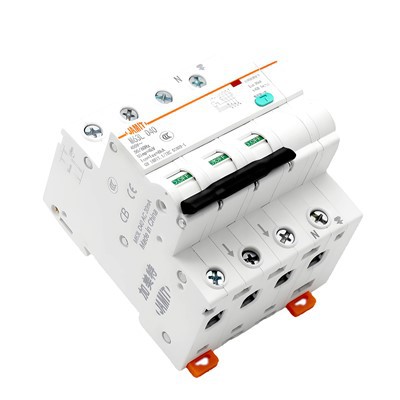
First, let’s get on the same page about what an RCCB does, because that’s the foundation of the question. An RCCB is a safety device designed to protect people from electric shock by detecting residual current—small leaks of electricity that shouldn’t be flowing through the system. By law, in most parts of the world (I can’t tell you how many times we’ve had to adjust product specs for markets like the EU, Australia, or North America), any circuit with sockets near water—like kitchens, bathrooms, outdoor outlets, or garage workshops—requires an RCCB. The core function works like this: the RCCB has two main current-carrying conductors: live (phase) and neutral. Under normal operation, the current going out on the live wire is exactly equal to the current coming back on the neutral wire. The RCCB’s internal test mechanism measures the difference between these two currents; if that difference is more than the safety threshold (usually 30mA for shock protection, 300mA for fire protection), it trips instantly to cut power before the leak can harm someone.
Now, that’s where the neutral connection comes in. For decades, every RCCB we sold at [supplier redacted] had a neutral terminal, right alongside the phase input and output. We never gave it much thought—until a few years ago, we had a contractor come to us in a panic. He’d just finished wiring a 3-phase commercial workshop and tried to install RCCBs on each single-phase circuit, but he ran out of neutral wires. The three-phase system he was working on only had three live phases and no dedicated neutral for each single-phase branch. He thought he could use a 3-phase RCCB, but the standard one we offered needed a neutral connection, so he’d spent two days chasing us for a workaround. That’s when we started digging into the exceptions to the “neutral required” rule.
There are two types of RCCBs, and that’s the key split most people miss. The first is the standard residual current device that uses a toroidal transformer around both live and neutral conductors—this is the type I’m describing above. The toroid senses the vector sum of the two currents; if they’re unequal, current is leaking to ground, and the RCCB trips. For this type, a neutral connection is non-negotiable. Why? Because the RCCB relies on the neutral path to complete the circuit’s current balance. If you don’t have a neutral, the live current can’t return, so the toroid can’t measure the residual difference accurately. If you tried to run that 3-phase single-phase branch without a neutral, the RCCB would either not trip at all, or trip randomly for no reason. We’ve seen that happen time and time again—installers will skip the neutral, get weird tripping, and blame the RCCB, when the real mistake was mismatching the device to the circuit.
But then there’s the other type: the earth-leakage RCCB, sometimes called a “non-residual” or “core balance” RCCB. This one works differently: the toroid wraps around all the phase conductors, not phase and neutral. Instead of measuring the difference between phase and neutral, it measures any current that’s leaking to ground from any of the live wires, regardless of whether neutral is present. That’s the device the contractor needed for his 3-phase workshop. Here’s the catch: earth-leakage RCCBs aren’t a one-size-fits-all solution. They’re perfect for 3-phase systems where neutral isn’t available, or for circuits where you’re not using the neutral conductor at all. But they’re not a replacement for standard RCCBs in residential or single-phase applications. Because earth-leakage RCCBs can’t detect faults that travel through a shared neutral. For example, if you have two adjacent circuits on the same phase, and a fault occurs in one that travels through the shared neutral to the other circuit, the earth-leakage RCCB won’t pick up that leakage—all the current looks balanced through the phases, so it doesn’t trip. That’s why residential systems, where you have multiple circuits sharing a neutral, still require the standard RCCB with a neutral connection.
Now, let’s talk about the common myths that lead people to get this wrong. One of the biggest I hear all the time is: “RCCBs need neutral for testing.” No, not the internal test button. The test circuit inside a standard RCCB simulates a small residual current by sending a tiny amount of current from the phase wire to a test resistor, then to the neutral. That test requires a neutral path, yes, but that’s just for the test function—if the RCCB is wired without neutral, the test button won’t work, which means you can’t verify the device is working. That’s a huge safety red flag. If an RCCB can’t be tested, it’s just a fancy switch, not a safety device.
Another myth: “If I don’t use the neutral conductor in my circuit, I don’t need a neutral connection on the RCCB.” Let’s test that logic. Suppose you’re running a single-phase circuit that only powers a 230V motor, and you’re using phase and ground, not neutral. If you wire an RCCB without a neutral connection here, what happens? The RCCB can’t measure the difference between phase and return current, because there’s no neutral to return on. If the motor’s insulation fails and sends current to ground, the RCCB might detect it, but it won’t be as reliable. In fact, many electrical codes warn against this: NEC (National Electrical Code) in the US, IEC (International Electrotechnical Commission) standards, and the UK’s BS EN 61008 all specify that for single-phase circuits with a neutral conductor, the RCCB must have a neutral terminal connected to the circuit’s neutral. The only exception is when neutral is not present in the circuit at all, which is where the earth-leakage RCCB comes in.
We’ve also run into issues with what happens when someone bypasses the neutral connection anyway. A few years back, a DIYer bought a standard RCCB from our store for his basement workshop. He didn’t want to run a neutral wire to the outlet, so he skipped the neutral terminal and connected only the phase. Within a week, his power tool started to leak, and he got a minor shock. The RCCB didn’t trip, because without neutral, it couldn’t sense the leakage. He came back to us frustrated, saying our RCCBs were faulty, and he’d bought a cheaper brand that “worked” without neutral. That’s when we showed him the difference between the two device types. The cheap unmarked RCCB he bought was actually an earth-leakage model, which wasn’t rated for single-phase circuits where neutral is present. That’s a dangerous mix: using a device designed for 3-phase no-neutral systems on a residential single-phase circuit. The results aren’t just nuisance tripping—they’re injury or death.
Let’s talk about code compliance, too, because that’s a big part of why this question matters. If you’re installing an RCCB in a residential setting in the EU, for example, IEC 60364 requires that residual current devices for 30mA protection are connected to both phase and neutral, because the circuit has a neutral conductor. In Australia, AS/NZS 3000 has identical language. In the US, the NEC 210.8 requires AFCI (Arc-Fault Circuit Interrupter) and GFCI (Ground-Fault Circuit Interrupter) protection for many circuits, and while GFCI is sometimes used interchangeably with RCCB, a standard GFCI (which is an RCCB) does require a neutral connection for correct operation. Skipping that connection isn’t just a technical mistake—it’s a code violation that can get an electrician fined, or worse, lead to an uninsurable property if something goes wrong.
Now, let’s get practical about when you do need neutral, and when you don’t. For any circuit that has both phase and neutral conductors (which is nearly all residential, commercial, and small commercial single-phase circuits), you need a standard RCCB with a neutral terminal connected properly. That includes: kitchen outlets, bathroom circuits, outdoor sockets, laundry rooms, garage outlets, and any circuit that powers appliances with metal enclosures. If you’re working on a 3-phase system without a dedicated neutral for each single-phase branch (like that workshop the contractor was working on), then an earth-leakage RCCB without a neutral connection is the right choice. But you have to verify that your local code allows that, and that the device is rated for that application.
We’ve refined our own product offerings over the years because of this confusion. We used to stock only standard RCCBs with neutral terminals, but after that contractor’s problem, we added a line of earth-leakage RCCBs specifically for 3-phase no-neutral applications. We also now include a 1-page guide with every order, breaking down when to use which, and we have a team of 3 certified electricians on staff who can answer questions from installers 7 days a week. That’s not just good customer service—it’s part of our job as an RCCB supplier, because we’ve seen firsthand how misinformation about neutral connections can lead to serious safety issues.
One last point: even when you have a neutral connection, you have to wire it correctly. We’ve had installers connect the neutral to the phase terminal on the RCCB, or leave the neutral unconnected at the load end, which makes the device trip constantly for no reason. Or worse, they connect the neutral to the ground terminal— that’s a huge hazard, because it creates a parallel path for current that can cause the RCCB to not detect faults. The neutral connection has to be a dedicated, separate conductor, running from the circuit’s neutral bus to the RCCB’s neutral terminal, and then to the load’s neutral terminal. No shortcuts.
At the end of the day, the answer to “Do RCCBs require neutral connection?” is: it depends on the type of RCCB and the circuit you’re working on. For standard, most commonly used RCCBs for single-phase circuits that have a neutral, yes, you absolutely need it. For earth-leakage RCCBs for 3-phase circuits without a neutral, no, you don’t. But choosing the right device for your application isn’t just a technical detail—it’s a safety requirement.

If you’re an electrician, a contractor, or a project manager working on a build, and you’re not sure which RCCB you need, or how to wire it correctly, don’t guess. Reach out and connect with our team to discuss your project requirements. We can help you pick the right device, confirm it’s code-compliant, and make sure you get it wired correctly to keep your installations safe. Don’t take chances with something that can protect lives—let’s work together to get it right.
Residual Current Circuit Breaker References
- IEC 61008: Residual current operated circuit-breakers without integral overcurrent protection for household and similar uses (RCCBs)
- National Electrical Code (NEC) Article 210.8: Ground-Fault Circuit Interrupter Protection for Personnel
- AS/NZS 3000: Electrical Installations (Wiring Rules)
- BS EN 60364: Low-voltage electrical installations – Part 4-41: Protection for safety – Protection against electric shock
Tianjin JMT Electric Co., Ltd.
Tianjin JMT Electric Co., Ltd. is one of the most reliable residual current circuit breaker manufacturers and suppliers in China, also supports customized service. Please feel free to buy advanced residual current circuit breaker made in China here from our factory.
Address: East Side of Road No.6, Jinghai Economic Development Zone, Tianjin
E-mail: wangbing@tj-jamit.com
WebSite: https://www.jamit-electric.com/
