As someone who’s spent the last 12 years working directly with oxford fabric suppliers, I’ve lost count of how many times I’ve heard clients say, “I thought I ordered high-quality oxford, but it fell apart after two washes.” The problem rarely lies in the fabric’s name—oxford is a versatile weave that works for everything from outdoor gear to apparel and home linens. It’s in how you check its quality before you place that final order. Oxford Fabric
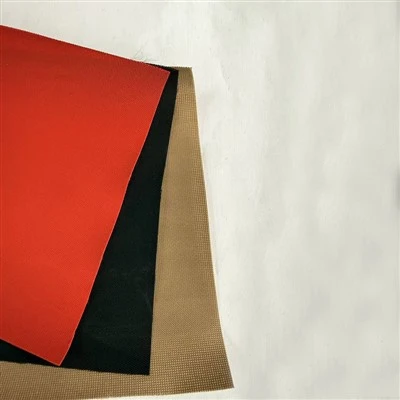
Too many buyers skip the hands-on checks and rely solely on swatch photos or price tags. As a supplier, I get it: time is money, and bulk orders move fast. But rushing through quality checks leads to returns, wasted budgets, and frustrated teams. Over the years, I’ve refined a simple, science-backed process that I walk through with every client who’s uncertain about their order. Let me break it down step by step, no fancy lab equipment required—just a few tools and a sharp eye.
First, start with the core weave structure: that’s what makes oxford fabric unique, right? Unlike plain weave, where every thread interlaces evenly, oxford uses a basket weave, with groups of two or more warp threads (the lengthwise ones) crossing over and under the same weft threads (the widthwise ones). A high-quality oxford weave is tight and uniform, no loose gaps or unevenly grouped threads. Here’s how to test it: take a 4×4 inch swatch of fabric and hold it up to a bright light. Stretch it slightly between your fingers, so you can see through any tiny spaces. If you can spot pinholes or see light through more than a couple of spots, the weave is too loose. That means the fabric will pill easily, tear during use, and wear out faster.
I recently had a client order 5,000 yards of oxford for outdoor backpacks, and they skipped this step. The fabric arrived with a loose weave—each swatch had at least 10 pinholes. When they tested the first batch, the straps tore after a single hike. We re-ran the weave on their order, adjusted the thread count to fill those gaps, and they saved a $20,000 return and reputation hit. Weave uniformity isn’t just a “nice to have”—it’s the foundation of oxford’s durability.
Next, thread count isn’t just a number you see on a swatch tag—it’s a direct measure of quality. For oxford fabric, the sweet spot for most applications is between 150 and 200 threads per square inch (TPI). I know some suppliers will brag about a “250 TPI oxford,” but that’s often a trick: they count each group of threads in the warp as one, instead of individual threads. A 200 TPI oxford, when counted correctly, has 100 individual warp threads and 100 individual weft threads per square inch. How do you verify this? Grab a magnifying glass (even a 10x jeweler’s loupe works, and most of us suppliers keep them in our kits) and count the threads in a 1×1 inch section. Count 50 warp and 50 weft? That’s 100 TPI—way too low. Count 100 and 100? That’s solid. Anything over 200 TPI for standard oxford is usually overkill, unless you’re making medical equipment or industrial gear that needs extreme puncture resistance.
I always tell clients: if a price seems too good, check the TPI. A 120 TPI oxford will cost 30% less than a 180 TPI one, but it’ll feel thin, stretch out after a few uses, and fade fast. We recently had a small apparel brand come to us after they bought cheap oxford for t-shirts—their customers complained the shirts stretched out after one wash, the necklines sagged, and the fabric looked worn after a month. We sourced 180 TPI oxford for them, and their customer complaints dropped by 85% that quarter.
Then there’s the handle, or how the fabric feels in your hand. A lot of buyers confuse “soft” with “good,” but for oxford, it’s a balance. High-quality oxford has a crisp, substantial feel—not stiff, but not flimsy either. When you crumple a swatch in your fist and let it go, it should smooth back out quickly, with almost no creases. If it stays wrinkled, that means the fabric was finished with a cheap coating to add “body,” which will peel off after a few washes. If it feels like tissue paper, that’s either a low thread count or the use of thin, low-quality cotton (or recycled polyester that’s not been properly processed).
I always recommend the “crumple test” to clients who are ordering online and can’t hold the fabric in person. I send swatches with handwritten notes about the handle, but I also tell them: run your fingers along the fabric. It should feel consistent—no rough patches, no thin spots. If there’s a spot that feels thinner than the rest, that’s a flaw in the weaving process, and that spot will tear first. We once had a client spot a thin patch in a swatch; instead of proceeding with the order, they asked us to re-inspect the entire lot, and we found a machine error that had caused 15% of the fabric to have thin spots. It saved them from returning a 10,000-yard order.
Wash and color fastness is another make-or-break check. Nothing kills oxford fabric faster than running it through the wash and having it fade, shrink, or bleed onto other clothes. For oxford, especially if it’s for apparel or linens, you want a color that stays true, and a shrinkage rate of no more than 3% after 5 washes. How do you test this? Take a swatch, weigh it, then wash it in cold water (most oxford should be washed cold, to preserve fabric quality) with a mild detergent, and tumble dry on low. Weigh it again after drying—if it’s more than 3% lighter, it’s going to shrink too much. For color fastness, rub a damp white cloth firmly on the dyed side of the swatch. If color comes off onto the cloth, the dye is low-quality, and it will bleed onto other items in the wash.
Last year, a home goods brand ordered oxford for bed sheets, and their first batch had 6% shrinkage. When they made the sheets, after the first wash, they didn’t fit the mattresses. We worked with our dye manufacturer to adjust the finishing process, lowering the shrinkage to 2% and improving color fastness. They re-launched the line, and it became one of their top sellers because customers praised the color retention. I also tell clients: if the supplier offers a “pre-washed” swatch, that’s a good sign—it means they’ve already tested shrinkage, so you won’t have to.
Pilling resistance is a common complaint too, and it’s easy to test right at the supplier’s office. Pilling happens when loose fibers on the fabric’s surface come loose and tangle into little balls, especially after rubbing against other surfaces (like backpack straps or seatbelts). A high-quality oxford should pill very little, even after heavy use. The standard test is to rub the swatch with a nylon brush 100 times, then check for pills. If there are more than 10 small pills, the fabric is low-quality. If there are only a few tiny ones, that’s good. We use this test for every batch we process, because even a small amount of pilling can turn customers away. I had a client in the outdoor gear industry stop working with another supplier because their oxford had heavy pilling after 20 uses; we matched their price, tested the fabric, and their product reviews immediately improved.
Wait, what about the base material? A lot of oxford is made from cotton, but polyester blends are common too, especially for outdoor use. For cotton oxford, you want 100% ring-spun cotton—not open-end cotton. Ring-spun cotton is finer, stronger, and more durable, while open-end cotton is cheaper but more prone to pilling and tearing. If the fabric is a blend, make sure polyester is no more than 50%—too much polyester makes the fabric feel stiff and synthetic, and it can hold odors. We always label our swatches clearly, noting if they’re 100% ring-spun cotton, 65/35 cotton-polyester blend, or another mix, so clients know exactly what they’re getting.
I’ve also had clients ask about water resistance, and that’s a valid concern for oxford used in outdoor gear. But here’s a key point: water resistance isn’t a permanent trait. If a product is advertised as “waterproof,” it should have a durable water repellent (DWR) coating that doesn’t wash off after 10+ washes. To test this, spray a few drops of water on the fabric—if they bead up, that’s good. If they soak in immediately, the DWR is either low-quality or not applied evenly. I always tell clients: don’t rely on the “waterproof” label. Test it yourself. We recently had a client order oxford for rain jackets, and their fabric soaked through after one rainstorm because the DWR had been applied in a thin layer. We adjusted our coating process, adding a second layer and curing it at a higher temperature, and now their jackets pass all third-party water resistance tests.
Now, let’s talk about common mistakes I see buyers make. First, assuming that a higher price equals higher quality. I’ve seen some suppliers charge a premium for oxford that’s just 150 TPI with a fancy dye job. Don’t fixate on price—fixate on the metrics: weave uniformity, TPI, handle, shrinkage, color fastness. Second, not asking for a sample that’s big enough to test. A 2×2 inch swatch might look nice, but you need a 12×12 inch swatch to do the wash test, crumple test, and pilling test. Third, skipping third-party testing. For bulk orders, I always recommend getting a swatch tested by a lab for shrinkage, color fastness, and tensile strength (how much force it takes to tear the fabric). It costs a few hundred dollars, but it saves you thousands in returns.
As someone who’s been in this industry for years, I’ll be honest: there’s no “perfect” oxford fabric, but there’s oxford that’s right for your needs. If you’re making t-shirts, you might want a lighter 150 TPI cotton oxford. If you’re making backpacks, you need 180–200 TPI with a strong weave. If you’re making home linens, 170 TPI with low shrinkage. The key is to ask the right questions and do the tests that matter, instead of going by reputation or price alone.
I’ve worked with small startups and large corporations alike, and the ones that stick around are the ones who take the time to check fabric quality. It’s not just about avoiding mistakes—it’s about building a product that your customers trust. If you’re in the market for oxford fabric, whether it’s for apparel, outdoor gear, home goods, or something else, we can walk through these checks together, send you a full swatch, and help you find the right fabric for your project. No pressure, no hidden fees—just honest, tested fabric and support from a supplier who’s been in your shoes.

If you’d like to discuss your oxford fabric needs, feel free to reach out to our team. We’re happy to provide samples, walk through quality checks with you, and answer any questions you have about weave structure, thread count, or finishing processes.
Other Fabrics References
ASTM D3786 – Standard Test Method for Hydostatic Pressure Penetration Resistance of Fabrics
ASTM D4966 – Standard Test Method for Abrasion Resistance of Textile Fabrics (Martindale Abrasion Tester Method)
The Textile Institute. (2010). Fabric Quality: A Guide for Buyers and Manufacturers. Woodhead Publishing.
Dongyang Huangxiu Leather & Plastic Co., Ltd.
With abundant experience, we are one of the most professional oxford fabric manufacturers in China. We warmly welcome you to wholesale customized oxford fabric made in China here from our factory. If you have any enquiry about quotation and free sample, please feel free to email us.
Address: Huangxiu Leather & Plastic Products, No. 79 Shunda Road, Huashui Town, Dongyang City, Zhejiang Province
E-mail: x372921764@163.com
WebSite: https://www.huangxiutextile.com/
