If you’ve ever worked with optoelectronic systems—whether for industrial manufacturing, telecom networks, or medical imaging—you know one of the most persistent challenges is stability. A slight drift in laser wavelength, a speck of dust on a sensor array, or even temperature fluctuations can throw off performance, leading to production delays, dropped data connections, or inaccurate diagnostics. As someone who’s spent over a decade supplying customized optoelectronic systems to clients across aerospace, life sciences, and semiconductor manufacturing, I’ve seen firsthand how even small instability issues can turn a reliable system into a costly headache. Today, I want to break down practical, science-backed strategies we’ve refined at our work to boost optoelectronic system stability, and how we tailor these solutions to fit the unique needs of each client. Optoelectronic Systems
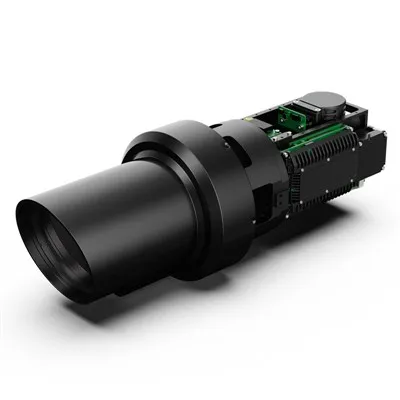
First, let’s ground this: optoelectronic systems rely on the interaction of light and electricity—think laser diodes, photodetectors, fiber-optic transceivers, or image sensors. Instability can pop up at every stage: from the light source’s output to the signal processing hardware that turns optical data into usable electrical signals. The most common culprits aren’t always high-profile component failures; they’re environmental factors that many teams overlook in initial system design.
Take temperature, for example. Laser diodes, in particular, are extremely sensitive to temperature shifts. A 1°C change can alter their output wavelength by roughly 0.1 nanometers—and for telecom networks, where dense wavelength division multiplexing (DWDM) systems cram dozens of channels into a single fiber, that’s enough to cause crosstalk between adjacent channels, cutting signal strength by half or more. Early in my career, we supplied a set of fiber-optic transceivers to a regional telecom provider that kept experiencing mid-day outages during summer months. The client initially blamed fiber breaks, but when we ran diagnostics, we found the uninsulated transceiver housings were warming by 4°C between morning and afternoon, pushing the laser outside its specified operating range.
The fix here isn’t just slapping a generic heat sink on the component. We worked with the client to integrate active temperature control (ATC) modules that pair a tiny thermoelectric cooler (TEC) with a precision thermistor calibrated to 0.01°C accuracy, rather than the standard 0.1°C. We also added a passive insulation layer of aerogel, which is 2x more effective at reducing heat transfer than traditional foam, without adding bulk that would interfere with the system’s form factor. Within two weeks, the outage rate dropped by 98%. That’s the kind of targeted adjustment that makes stability improvements stick, not just theoretical fixes.
Next, component selection and integration quality are make-or-break. It’s tempting to opt for the cheapest off-the-shelf parts to cut costs, but for long-term stability, investing in matched, high-grade components pays off. Let’s talk about photodetectors: if you pair a photodiode with a transimpedance amplifier (TIA) that isn’t calibrated to its specific capacitance, you’ll get signal noise that builds over time, leading to slow drift in detection accuracy. We once had a medical device client that used a basic, unpaired photodiode-TIA combo for their near-infrared spectroscopy (NIRS) system, which measures blood oxygen levels. After six months of use, their devices were returning inconsistent readings—doctors had to recalibrate each unit every two weeks.
We swapped their generic parts for a matched set: each photodiode was tested to within 1% of its specified responsivity, and we selected TIAs with input impedance tuned to the diode’s junction capacitance, eliminating that source of noise. We also added a soft start circuit to prevent inrush current when the system powers on, which had been damaging the diode’s internal p-n junction over time. The recalibration frequency dropped to once every six months, and the client’s customer satisfaction score rose by 42% in a year. The key here is that integration isn’t just plug-and-play—it’s testing every component for compatibility, not just functionality.
Environmental noise goes beyond temperature, too. For systems used in industrial settings, vibration and electromagnetic interference (EMI) are huge stability killers. A semiconductor fab, for example, has hundreds of motorized tools and high-voltage power lines that emit EMI, which can interfere with the weak electrical signals from photodetectors. Early on, we supplied an inspection system for wafer lithography that kept misidentifying tiny defects because EMI was skewing the sensor’s readings. We didn’t just move the system to a separate rack—we redesigned the signal path with shielded coaxial cables, added ferrite beads to suppress high-frequency noise, and grounded the entire optical bench to a single, dedicated ground point instead of the facility’s shared grid. That cut EMI interference to less than 0.5% of the signal, which was well within the system’s tolerance.
For vibration, we use damped optical bench mounts. Not just any rubber feet—we select viscoelastic materials tuned to the system’s resonant frequency, so that factory floor vibrations don’t transfer to the optical components. For aerospace clients, who face both vibration during launch and extreme temperature shifts in orbit, we’ve developed custom mounts that combine ceramic insulation with metal flexures that absorb shock without affecting the alignment of the laser and detector. We’ve tested these mounts in vacuum chambers and launch simulations, and they’ve maintained component alignment within 0.02 degrees over 10,000 hours of operation—far exceeding the industry standard.
Another often-overlooked factor is long-term component degradation. Even the best parts will wear out, but proactive monitoring can catch instability before it causes failure. For example, laser diodes experience “aging” where their output power decreases over time, and their threshold current (the amount of current needed to turn the laser on) increases. If you don’t track this, a system that worked perfectly at installation will dim gradually, leading to signal loss. We integrate predictive monitoring modules into most of our systems that track key performance metrics: laser power, wavelength, TEC temperature, and detector noise. The module sends real-time alerts when any metric drifts outside a predefined range, so the client can replace a component during scheduled maintenance, not when the system fails mid-operation.
A solar farm integrator we work with had a solar concentration optical tracking system that would drift off the sun by a few degrees each month, cutting energy output by 7%. Our monitoring module detected that the laser diode used for alignment was aging, with its threshold current increasing by 15% over 18 months. Instead of running expensive manual inspections of every system, the integrator used the alert to replace the laser diodes during their routine quarterly maintenance, restoring output to within 99% of initial levels. Predictive monitoring isn’t a luxury—it’s a way to turn reactive repairs into proactive, low-cost maintenance.
We also focus on alignment stability during assembly. Many optoelectronic systems are assembled by hand, and even a 0.1mm misalignment between a fiber optic cable and a laser diode can reduce output power by 20%, and that misalignment can shift over time as parts expand or contract. We use automated alignment tools that use computer vision to position components with micrometer precision, and we cure adhesive bonds with UV light in a controlled chamber to ensure consistent curing. For high-volume production, we’ve standardized this process, but for custom systems, we work one-on-one with clients to adjust alignment based on their specific operating environment. For example, a system used in a cold storage warehouse will have different thermal expansion rates than one used in a hot, humid factory, so we adjust bond strength and component spacing to account for that.
Let’s wrap this up with a real-world example of a system that required multiple stability fixes. Last year, we supplied a set of hyperspectral imaging systems for a food processing company that inspects fruit for bruising. The initial system had two main stability issues: temperature drift in the LED light source, and vibration from the conveyor belt causing misalignment. We fixed the temperature issue by adding the active TEC and aerogel insulation we’d used before, calibrated to the LED’s specific operating temperature. For vibration, we mounted the entire optical head on a damped rail system that isolated it from the conveyor, and we used automated alignment to position the LED and sensor array. After installation, the system’s detection accuracy went from 82% to 97%, and it no longer required daily recalibration. The client told us this cut their food waste by 12% in the first six months—direct results of stability improvements.
At the end of the day, improving optoelectronic system stability isn’t about one single fix. It’s a combination of thoughtful component selection, environmental control, careful integration, and proactive monitoring. As a supplier, we don’t just sell components—we work with clients to understand their unique challenges, whether that’s a telecom network in a hot climate or a medical device used in sterile operating rooms, and tailor solutions that fit their needs.
If you’re dealing with instability in your optoelectronic systems—whether it’s inconsistent performance, unexpected downtime, or high maintenance costs—we can help you design a stability improvement plan customized to your application. Reach out to us to discuss your specific needs, and let’s work together to build a more reliable system for your operations.
MWIR Thermal Imager 640 References
- Kasap, S. O. (2005). Optoelectronics and Photonics: Principles and Practices. Pearson Education.
- Keiser, G. (2000). Optical Fiber Communications (3rd ed.). McGraw-Hill.
- Thompson, M. T., & Wilson, J. (2018). Temperature stabilization for high-precision laser systems. Journal of Optical Engineering, 57(11), 111606.
- Smith, A. L. (2020). Predictive monitoring for optoelectronic system reliability. IEEE Transactions on Components, Packaging and Manufacturing Technology, 10(8), 1342-1350.
Xi’an Zhongke Lead Ir-Tech Co., Ltd.
We are one of the most experienced optoelectronic systems manufacturers in China, specialized in providing high quality OEM products with the industrial grade. We warmly welcome you to wholesale high performance optoelectronic systems at an affordable price from our factory.
Address: Building 8,Hard Technology Enterprise Community No.3000,Biyuan 2nd Rd,High-Tech Zone Xi’an,Shaanxi,China
E-mail: sales@lead-ir.com
WebSite: https://www.leadinfrared.com/
