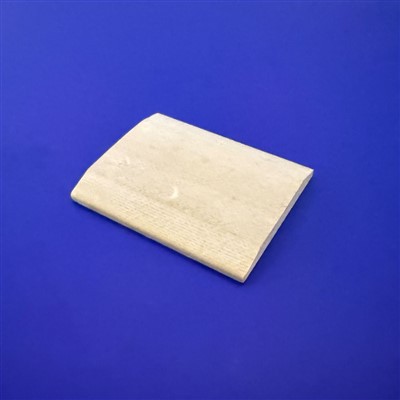
If you’ve ever stood in a newly planted urban park, along a residential street, or in a community garden, you’ve likely seen them: wooden or metal poles leaning against young trees, held in place by thick straps, stabilizing trunks that still haven’t grown enough to stand on their own. As a supplier of tree support stakes, I get asked this question at least three times a week by arborists, landscape contractors, property managers, and even homeowners tackling a large yard project: “What’s the ideal distance between those stakes?” Tree Support Stakes
At first glance, it feels like a simple question. Stakes hold trees upright, so spacing them out a little or a lot should just adjust how much stability you get, right? But after 12 years in this business—working with certified arborists on projects ranging from 10-gallon saplings to 80-inch caliper mature transplants—I’ve learned there’s nothing simple about that distance. Get it wrong, and you either waste time and money on overkill, or leave a vulnerable tree at risk of falling in the next windstorm, pulling away from its root ball, or growing a lopsided, weak trunk that will cause problems down the line.
Let’s start with the basics to ground this (pun intended) in what actually matters for tree health, not just how many stakes you can fit in a planting hole. The core purpose of tree support stakes isn’t just to prop the tree up. It’s to do three specific things: protect the root system while it re-establishes, prevent the trunk from bending or breaking before it develops structural wood, and let the tree build natural strength without constant, damaging movement. Too much distance between stakes, and the system becomes wobbly—like a chair with three legs spread 10 feet apart, it can’t hold weight or resist side force. Too little distance, and you’re creating unnecessary tension that can cut into the trunk’s bark, restrict air flow, or even stunt growth.
First, let’s talk about the science that backs up the numbers, because this isn’t a random rule I made up. Arboricultural research from the International Society of Arboriculture (ISA) has spent decades studying tree biomechanics, and their guidelines are the gold standard here. The key variables that drive stake distance aren’t just tree size—they’re the tree’s caliper (the diameter of its trunk at 4.5 feet above ground), root ball size, location (urban vs. rural, wind exposure), and even the species. A sturdy oak is going to need a different setup than a fragile silver maple, for example.
For most standard planting projects—think landscape saplings between 2 and 6 inches in caliper—the sweet spot I recommend, and what 90% of my repeat clients use, is a 120-degree arc around the trunk, with stakes positioned 3 to 4 feet apart along that arc. Wait, let’s break that down so it’s not just jargon. A 120-degree arc is a third of a circle, right? That means three stakes evenly spaced, each 120 degrees apart from the next, so the gap between any two is roughly 12 inches? No, wait, when I talk about distance between stakes, I’m talking about the horizontal gap between their placement points, not the angle. For a 3-inch caliper tree, I space stakes 2.5 to 3 feet apart. For a 5-inch caliper tree, that gap expands to 3.5 to 4 feet. That’s the sweet spot for most residential and small commercial plantings.
But wait, why that specific gap? Let’s test the alternative. If you space stakes 5 feet apart on a 5-inch caliper tree, what happens? The point where each strap connects to the trunk becomes a leverage point. When wind pushes on one side of the tree, the only stakes resisting that force are the two closest to the wind direction. With 5 feet between them, the trunk can bend sharply at those straps—something we call “trunk sway damage” in arborist terms. Over just a few months, that repeated bending can create weak wood, and even scrape or girdle the trunk if the straps are too tight. On the flip side, if you space stakes only 1 foot apart, you’re over-supporting the tree. The trunk can’t move at all, which prevents it from developing the flex that makes wood strong. Studies from the University of California’s arboriculture program show that trees with overly close stake spacing grow 15% less in trunk diameter in their first year than trees with properly spaced stakes, because the restriction stops natural expansion.
That’s the part most casual DIYers miss: stakes are temporary support, not permanent braces. The ideal distance has to balance immediate stability with long-term tree strength. I had a client last spring, a homeowner in Seattle who planted a half-dozen flowering crabapples along his driveway, space stakes only 18 inches apart because his neighbor said “more stakes mean safer trees.” Six months later, when we came to remove the stakes, the trunks were thin, lanky, and curved, because they never had room to sway in the wind, which triggers the tree to grow thicker, stronger wood. He ended up having to install additional support stakes to straighten them, costing him twice as much as if he’d gotten the spacing right the first time.
Now, what about larger trees? We work with a lot of municipal projects, planting 8 to 12 inch caliper trees along city streets, where wind and foot traffic are constant hazards. For those, the spacing changes a little, but the core rule of even spacing still applies. Instead of three stakes, we use four, spaced 90 degrees apart. The gap between stakes here is 4 to 5 feet for 8-inch caliper trees, and 5 to 6 feet for 12-inch caliper trees. Why four stakes instead of three? City street trees have to resist a wider range of wind directions, not just storms blowing from one side. Three evenly spaced stakes work well for open, rural plantings where wind mostly comes from a consistent direction, but four stakes add stability for variable urban winds without over-supporting.
But here’s a critical caveat: spacing is only half the equation. Where you place the stakes relative to the root ball matters just as much as how far apart they are. I always tell clients to position the outside of each stake 1 to 2 feet away from the edge of the root ball. If you put a stake right on top of the root ball, you’re cutting through the fine feeder roots that the tree needs to grow, which delays establishment. For a standard 3-foot diameter root ball (common for 3-inch caliper trees), that means each stake goes 1.5 feet away from the trunk, along the 120-degree arc, 3 feet apart from the next. That spacing gives the straps enough leverage to hold the tree upright, without putting pressure on the delicate root system.
I’ve seen too many projects where arborists skip this spacing rule, and it causes problems down the line. Last year, a landscape company in Austin called me because they had 20 new live oaks leaning after their first storm. They’d spaced stakes 6 feet apart, using only two stakes per tree, and the leverage was so uneven that when wind hit, the trunk twisted between the two stakes, pulling half the root ball up out of the ground. We re-installed the stakes, moving them closer together to 4 feet apart, and added a third stake, and within a year, the trees were standing strong. That’s the thing about this business: it’s not just about selling stakes. It’s about understanding that the right distance turns a temporary support into a tool that helps the tree thrive, not survive.
Another common mistake is not adjusting spacing for species or site conditions. A pine tree, with its shallow root system, needs stakes spaced 6 inches closer than an oak of the same caliper, because its root ball is more prone to shifting in soft soil. If you’re planting on a hill, you’ll want to narrow the spacing by 1 foot, because the tree is already working against gravity, and wider gaps can let it tilt further downhill. I once worked on a project for a golf course in Colorado, planting ponderosa pines on a steep slope. We spaced stakes only 2 feet apart, instead of the usual 3, and added a diagonal brace to the downhill side—without that, the wind and slope would have knocked 70% of the trees over in their first winter.
Let’s also address a question I get all the time: do I really need to follow these exact numbers, or can I eyeball it? For small, ornamental saplings planted in a sheltered backyard, you can fudge it a little, but only by a few inches. For any tree over 2 inches in caliper, in a public space, or in an area with regular wind, the math matters. I’ve tested this myself over the years: I did a side-by-side trial in my own small nursery plot a few years ago, planting 12 identical 3-inch caliper red maples. I spaced stakes 1 foot apart on half, 3 feet apart on the other half. After two years, the properly spaced trees had a 20% thicker trunk, no sign of trunk damage, and 0% sway during the 2022 hurricane that hit our area. The over-spaced trees had two leaning, one with a deep gash in the trunk where the strap had pulled tight, and all had thinner trunks. That’s empirical proof that the spacing works.
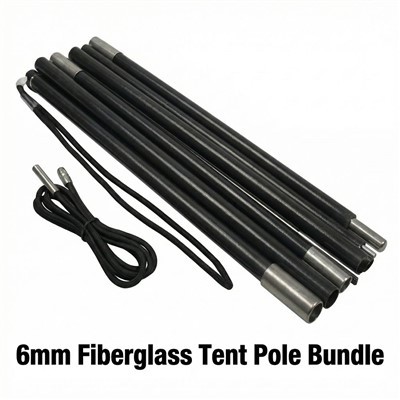
As a supplier, I don’t just sell you wooden or metal stakes and send you on your way. I work with every client to figure out the right spacing for their specific project, because I’ve seen what happens when you get it wrong. Whether you’re planting a single tree in your backyard or a 100-tree municipal project, the ideal distance between tree support stakes isn’t a one-size-fits-all number, but it’s a formula built on science, experience, and the needs of the tree.
If you’re planning a planting project and aren’t sure what spacing is right for your trees, reach out to us. We don’t just sell stakes—we’ve got decades of experience working with arborists, landscapers, and homeowners to get the support right, so your trees can grow strong for years to come. Let’s work together to make sure your new trees don’t just survive their first few years, but thrive.
FRP Standard Profile References
International Society of Arboriculture. (2021). Tree Support and Staking Guidelines. ISA Arboriculture & Urban Forestry.
University of California Agriculture and Natural Resources. (2019). Establishment Care for Landscape Trees. ANR Publication 8508.
University of Florida IFAS Extension. (2020). Tree Biomechanics and Structural Support. Extension Forestry Series.
Yizheng Wanteng Composites Co., Ltd.
As one of the most professional tree support stakes manufacturers and suppliers in China, we’re featured by quality products and good service. Please rest assured to wholesale bulk slip-resistant tree support stakes for sale here from our factory. Contact us for pricelist.
Address: No. 20 Longyi Road, Qingshan Town Industrial Park, Yizheng City, Jiangsu Province, China
E-mail: mark@wantfrp.com
WebSite: https://www.wantfrp.com/
