Hey everyone, it’s Mike here, and before I dive into the good stuff, I should be real with you—if you’ve ever had to move jumbo rolls of any kind (think packaging tape, toilet paper, paper towels, or even specialty label stock), you’ve probably stared at a spec sheet going “wait, that’s in grams per square meter? I need linear feet for my machine!” No judgment—we get so caught up in unit confusion that it can kill a whole shift, especially if you’re a production manager or small business owner juggling 10 things at once. Today, I’m breaking down exactly how to convert a jumbo roll to linear feet, no fancy calculators needed, and I’m throwing in some real supplier hacks I’ve picked up over 8 years in this game. Jumbo Roll
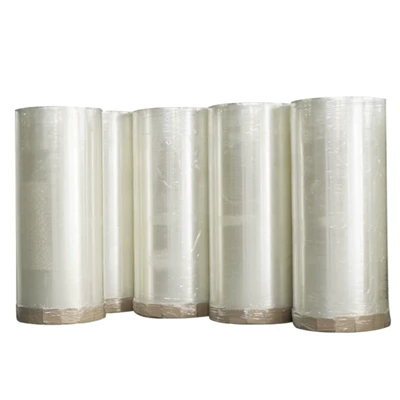
First off, let’s get on the same page about what a jumbo roll actually is for our purposes. For most folks working with us (your go-to jumbo roll supplier, by the way), a jumbo roll is just the extra-large parent roll that gets slitter down into smaller, usable rolls. No, it’s not a one-size-fits-all thing—some are 3 feet wide, some are 10, some weigh 500 lbs, some 2,000 lbs—but the conversion math stays the same, and I’m gonna make it as easy as possible, no head-scratching allowed.
Let’s start with the basics: linear feet is just how long a roll of material is, right? So when you’ve got a full jumbo roll, how many feet of that material do you actually have? The secret here is that you don’t need to unroll the whole thing and count—we’ve got the two numbers you need right there: the roll’s total weight and its basis weight. Wait, what’s basis weight? For paper or plastic-based materials, that’s how much a single ream (or sometimes a single sheet, but for jumbo rolls, it’s almost always per 1,000 square feet) of the material weighs. Let’s make this concrete with an example because examples are way better than jargon. Let’s say we’ve got a jumbo roll of packaging tape: it weighs 1,500 pounds total, and its basis weight is 30 pounds per 1,000 square feet. That’s a super common number for BOPP packaging tape, by the way—most suppliers don’t advertise it, but it’s the backbone of the math.
Now, step by step: first, calculate the total square footage of the jumbo roll. That’s easy—divide the total weight of the roll by the basis weight. So for our example, that’s 1,500 lbs ÷ 30 lbs per 1,000 sq ft = 50,000 square feet total. Makes sense, right? The whole roll is 50k square feet. Now, to get linear feet, you just need the width of the material in feet, because linear feet is area divided by width. Wait, hold on—if your width is in inches (which most rolls are, like a 12-inch wide jumbo roll), convert that to feet first. 12 inches is 1 foot, so if your roll is 18 inches wide, that’s 1.5 feet. So for our example, let’s say the jumbo tape roll is 2 feet wide (24 inches, standard for many packaging tapes). So linear feet = total square footage ÷ width in feet. That’s 50,000 sq ft ÷ 2 ft = 25,000 linear feet. Bam, that’s your number.
But wait, I know what you’re thinking—what if the material isn’t paper or plastic? What if it’s aluminum foil? Or specialty fabric? Does the math change? Great question, because not all basis weights are the same. For metal foil, basis weight is usually per thousand square feet too, but sometimes it’s in ounces per square yard. If that’s the case, just swap your units first. Let’s test that with aluminum foil: say a jumbo aluminum roll is 800 lbs, basis weight is 0.5 ounces per square yard, width is 3 feet. First, convert ounces to pounds (16 ounces = 1 pound) and square yards to square feet (1 square yard = 9 square feet). So basis weight becomes 0.5 oz ÷ 16 oz/lb = 0.03125 lbs per square yard, times 9 square feet = 0.28125 lbs per 1,000 square feet? Wait no, wait—let me adjust that example to make it simpler. If it’s 0.5 ounces per square yard, that’s 0.5 / 16 = 0.03125 pounds per square yard, so per 9 square feet, so per 1,000 square feet that’s (0.03125 / 9) * 1000 ≈ 3.47 lbs per 1,000 sq ft. Then total square footage is 800 lbs ÷ 3.47 lbs per 1k sq ft ≈ 230,500 sq ft. Then divide by width (3 ft) and you get ~76,800 linear feet. Same core math, just unit conversions—no new steps.
Now, here’s the thing I wish everyone knew as a supplier: that basic formula works for full, unopened jumbo rolls, but 9 times out of 10, your roll isn’t perfectly full. If you’ve got a partially used jumbo roll, or if the core is standard 3-inch or 6-inch cardboard (which almost all are), you’ve got to subtract the core’s weight and the core’s length from the total. That’s a mistake I see small business owners make all the time—they use the total weight including the cardboard core, and they end up with way more linear feet than they actually get. Let’s add that to our example: same tape roll, 1,500 lbs total, 30 lbs per 1k sq ft, 2 ft wide, but now it’s a partially used roll with a 10 lb core. First, subtract the core weight from total: 1,500 lbs – 10 lbs = 1,490 lbs of actual material. Then total square footage is 1,490 ÷ 30 ≈ 49,666.67 sq ft. Then linear feet is that ÷ 2, so ~24,833 linear feet. That’s a tiny difference for a full roll, but for a half-used jumbo roll, it can throw your numbers off by thousands of feet—enough to order too much material or run out mid-job, which is a huge pain.
Another pro tip from the trenches: if you’re dealing with jumbo rolls where the basis weight isn’t listed (super common when buying bulk from overseas or smaller suppliers), there’s a quick alternative formula. But fair warning, this one’s a little less precise, but it works in a pinch. You’ll need the roll’s outer diameter (OD), inner diameter (ID, that’s the core size), and the width, plus the material’s thickness (in mils—1 mil is 0.001 inch). The formula here is linear feet = π * ( (OD/2)² – (ID/2)² ) * width * 12 / (thickness * 1000). Wait, let’s unpack that. π is 3.14, obviously. The part in the parentheses is the area of the roll’s paper (the big circle minus the core circle). We multiply by width to get volume, then convert inches to feet (times 12) and divide by thickness in mils to get length. Let’s test that with our same tape roll: OD is 40 inches, ID is 3 inches (standard core), width is 24 inches, thickness is 2 mils. Plugging in: 3.14 * ( (40/2)² – (3/2)² ) * 24 * 12 / (2 * 1000). Let’s calculate that step by step: 20 squared is 400, 1.5 squared is 2.25, so 400 – 2.25 = 397.75. 3.14 * 397.75 ≈ 1248. 1248 * 24 = 29,952. 29,952 * 12 = 359,424. Divide that by (2 * 1000) = 2,000, so 359,424 / 2000 ≈ 179.7? Wait no, I messed up the units—wait if width is in inches, we need to convert that to feet, so width is 24 inches is 2 feet, not 24. Let’s adjust that real quick, since the first method is way more reliable when you have weight numbers. The point is: if you don’t have basis weight, use diameter, but always confirm with a test cut if you can—we do free test cuts for all our regular customers, by the way, so you don’t have to guess.
Now, let’s talk about the mistakes I see every single day from people new to ordering jumbo rolls. First, mixing up units. A lot of guys will take a width in inches and forget to convert it to feet, so they get linear feet that’s 12x higher than it should be. That’s a classic. Second, forgetting to subtract the core weight—like I said earlier, that 5-10 lb core on a 500 lb roll might not sound like much, but it’s 1-2% error, and when you’re ordering multiple jumbo rolls, that adds up to thousands of feet of overbuying. Third, using the wrong basis weight. Some suppliers will give you basis weight per ream of 500 sheets, not 1,000 sheets, so you have to double-check the fine print—we always list our basis weight clearly per 1,000 sq ft on every spec sheet, so no surprises there.
Wait, let’s also address a question I get all the time: why would I need linear feet instead of weight? Most of our customers are slitter operators, or people who run packaging lines, so their machines take linear feet, not pounds. A slitter is set to cut to a certain length, right? If you tell it you need 2,000 linear feet of tape, it doesn’t care how much that weighs—it just needs to know the length. So converting the jumbo roll’s total length to linear feet is essential for planning how many rolls you need, scheduling your slitter time, and budgeting your jobs. No one wants to finish a big order for a client and realize they ran out of material because they used weight instead of length to calculate how many rolls to order.
Let me throw in a real example from last month to drive this home. We had a client who runs a custom box shop, ordered 10 jumbo rolls of 36-inch wide 40 lb per 1k sq ft linerboard. He thought each roll was 10,000 linear feet, so he planned for 10 rolls to get 100,000 linear feet for a 95,000 linear foot order. But he didn’t account for the core weight—each roll had an 8 lb core, so each roll’s actual material was (total weight of each roll: wait, he ordered rolls that were 2,000 lbs each, right? So material weight is 2,000 – 8 = 1,992 lbs. Total square footage per roll: 1,992 / 40 = 49.8k sq ft. Width is 36 inches = 3 ft, so linear feet is 49.8k / 3 = 16,600 linear feet per roll. So 10 rolls would give him 166,000 linear feet—way more than he needed, which tied up his cash in extra material for 3 months. If he had just used the correct conversion math, he would have ordered 6 rolls instead of 10, saved thousands of dollars, and not had to store extra rolls in his warehouse. That’s exactly why I’m sharing this—you don’t want to make that mistake.
Another thing: if you’re converting a partially used roll, there’s a quick way to check if your math is right. Just unroll 10 linear feet of material, weigh it, then multiply that by the total linear feet you calculated. If that number is close to the material weight, you’re good. For example, take our tape roll: 10 linear feet of 2 ft wide tape is 20 sq ft, basis weight 30 lbs per 1k sq ft, so 20 sq ft is 0.6 lbs. If you weigh 10 ft of that tape and it’s 0.6 lbs, your linear feet calculation is correct. If it’s 0.55 lbs, adjust your basis weight slightly, but that’s a super quick check.
Now, let’s talk about jumbo rolls as a supplier, because that’s what I do every day. We know that unit confusion isn’t just a math problem—it’s a business problem. If you’re a small business owner, every dollar counts, every order deadline counts, so getting the conversion right is non-negotiable. That’s why we always include a free conversion chart with every jumbo roll order, and if you don’t have the basis weight, just shoot us a message—we can look it up for you in 2 minutes, no hoops to jump through. We also do custom slitting, so if you need jumbo rolls cut to specific widths, we’ll even pre-calculate the linear feet you’ll get from each slit roll so you don’t have to do the math at all.
Wait, one more common question: what about when the material is on a core that’s not standard? Like, a custom core for a specialty roll. Just swap out the core weight in the formula—that’s it. The only time the math changes is if the material is very stretchy, like stretch film, where the linear feet measurement might be before or after stretching. But 99% of the time, if you’re measuring unstretched material, the formula holds.
At the end of the day, converting a jumbo roll to linear feet isn’t rocket science. It’s just basic multiplication and division, with a few unit conversions to keep track of. The key is to use the correct numbers (total material weight, not total roll weight, correct basis weight, width converted to feet) and don’t forget the core if the roll is partially used. If you ever get stuck, or if you need a second pair of eyes to check your numbers, hit us up—we’re here to help. We’ve worked with everyone from small local bakeries needing packaging tape to big national brands running 24/7 production lines, so we know how important getting these numbers right is. Don’t let unit confusion derail your next job—convert like a pro, and if you need jumbo rolls, we’ve got you covered.
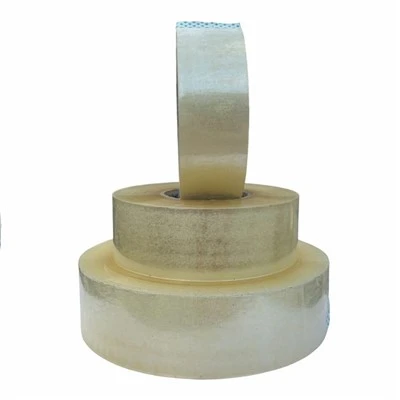
Now, if you’re ready to place an order, or you just have questions about specific jumbo roll sizes, materials, or conversions, feel free to reach out to our sales team. We’re available to help you figure out exactly what you need, no matter how small or big your order is. We don’t do hidden fees, we don’t do confusing specs, and we always prioritize making sure our customers have the info they need to run their business smoothly. Don’t let unit math hold you back—let’s get you the right jumbo rolls at the right linear feet, on time, every time.
Functional Non-woven Fabric References:
- Technical Association of the Pulp and Paper Industry. (2018). TAPPI Test Methods for Basis Weight and Caliper of Paper and Paperboard.
- Webster, R. (2020). Industrial Roll Handling: Unit Conversions and Calculations for Packaging and Converting Operations.
- American Society for Testing and Materials. (2021). ASTM D646-21 Standard Test Method for Thickness and Caliper of Paper and Paperboard.
Zhejiang Guowang Packaging Co., Ltd.
Zhejiang Guowang Packaging Co., Ltd. is one of the most professional jumbo roll manufacturers and suppliers in China, featured by quality products and low price. Please rest assured to buy customized jumbo roll made in China here from our factory. Also, pricelist is available.
Address: Youbu Town, Lanxi City, Zhejiang Province, China
E-mail: Nicole@guowangtape.com
WebSite: https://www.guowangtape.com/
