Hey folks, Axial Fan
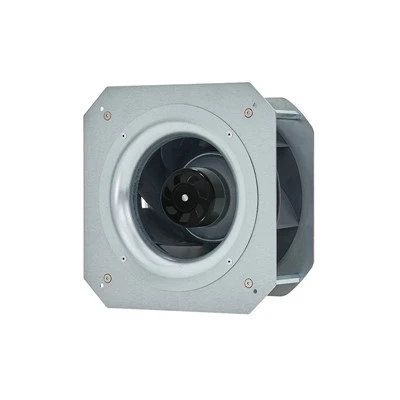
If you’re reading this, chances are you’re staring at an axial fan that’s supposed to be cooling your server rack, ventilating your warehouse, or drying out your construction site — and it’s just… dead. I get it, because I’ve been on both sides here: before I started this gig as an axial fan supplier, I was the guy scrambling to fix a broken fan in my own workshop at 2 a.m., panicking because a whole batch of parts was gonna get ruined by the morning.
Now, after years of talking to customers who come to me with the same “my fan won’t turn on” panic, I’ve stopped giving generic one-sentence fixes. Axial fans are actually pretty straightforward pieces of kit — they don’t have the crazy controls of big HVAC systems or the delicate parts of a desktop PC. So let’s break this down like we’re sitting at a workshop bench, no fancy jargon, no stuffy manuals, just real stuff that actually happens to axial fans.
First, let’s start with the most obvious (and most overlooked) thing that’s not the fan itself. Wait, hold on — did you check the power? I can’t tell you how many times a customer calls me like their fan is total garbage, and it’s just that the outlet they plugged it into is dead because someone bumped the circuit breaker while moving a pallet. Or the power cord got chewed by a rodent? Yeah, that’s way more common in warehouses than people want to admit. If your fan is hardwired (not just a plug), did the wire nuts at the connection point come loose from vibration? Axial fans vibrate a lot when they’re running — that’s kind of their job, moving air takes force — so loose connections happen. I’ve seen a fan that was installed last week stop working just because the vibration shook a single wire loose. That’s not a defect in the fan, that’s just installation 101. I always tell new customers to do a quick “power check” first before they start tearing the fan apart. It saves everyone time.
Okay, so power is good. Now, let’s look at the easy, no-tools fixes. A lot of axial fans have a fuse or an internal thermal reset — especially the ones for industrial use. Those resets are there to protect the fan if it’s overheating, like if the air intake is blocked and the fan is trying to push way more air than it’s supposed to. A lot of people don’t even know those resets exist. They’ll think the fan is broken forever, but if you press that small little button on the motor housing (usually red or black), it kicks it back on. But wait — why did it trip in the first place? That leads us to the next big one: blocked airflow. Axial fans work by pulling air through the blades and pushing it out the other side. If the intake or exhaust is clogged with dust, leaves, debris, even a spiderweb that’s thick enough to block the air, the fan can’t move air, so it either stops or strains so hard it burns out the motor. I had a customer last month with a fan on a greenhouse that stopped working, turns out it was clogged with pollen from the flowering plants around it — that’s not a fan flaw, that’s just being in a dusty or dirty environment. Pro tip: I always tell customers to check the intake screen every month, especially if they’re running the fan in a high-dust area. Even a thin layer of dust can cut airflow by 20% or more, and over time that kills the motor.
Now, what if the fan is making a weird noise but not turning? That’s a different issue, but still super common. It could be something in the blades — did a small rock, a piece of wood, or even a bird nest get stuck between the blades and the fan housing? Axial fans have a tight gap there, and even a tiny piece of debris can jam the blades so they can’t turn. I’ve pulled out everything from a plastic bag to a garden stake out of fans over the years. That’s an easy fix — just turn the fan off, unplug it, take off the grill, and manually spin the blades to see if they hit anything. If they do, fish that stuff out, and you’re good to go. Another thing here: bearing wear. Axial fans have two bearings (usually ball bearings for industrial use, sleeve for smaller ones) that let the blades spin smoothly. Over time, especially if the fan is running 24/7, those bearings get dry or worn out. You’ll usually hear a high-pitched squeal or a grinding noise before the fan stops completely. With sleeve bearings, sometimes a little lightweight oil (like sewing machine oil, not heavy motor oil) can help, but if it’s ball bearings and they’re actually worn, you’ll need to replace them — or the whole fan, depending on how old it is. I always recommend replacing bearings with high-quality ones if you’re gonna do that, because cheap bearings will just wear out again in a few months.
Wait, what about the fan turning on for two seconds then off? That’s usually a control issue, not the fan itself. If your fan has an external controller — like a variable speed switch, a thermostat, or a timer — those can go bad way more often than the fan motor. For example, if your thermostat is set wrong or broken, it might send a signal that makes the fan shut off immediately, thinking the space is already cooled. I’ve had customers swap out a $20 switch instead of a $500 fan and it works perfect. That’s why I always tell people to test the fan by bypassing the controller first — plug it directly into power, if it works, the controller is the problem, not the fan. That saves you a ton of money.
Now, the stuff that’s more on the fan’s end, but still not a “defect” right out of the box. Did you check the voltage? Yeah, I know that sounds basic, but if someone wired a 240V fan to a 120V circuit, it won’t turn on, or if it’s a 120V fan on a 240V circuit, it’ll burn out instantly. That’s a super common installation mistake, especially for people who aren’t electricians. I always include a label on every fan I sell with the exact voltage and wiring specs, but I get it, people lose the labels. So double-check that. Another thing: for bigger axial fans, there’s a start capacitor. That’s a little round thing on the motor that gives the blades a push to get spinning from a dead stop. If that capacitor fails, the fan might hum really loud but never turn on. You can test that with a multimeter, but if you’re not comfortable working with electrical stuff, call an electrician — don’t mess with that on your own, it’s not worth getting shocked.
I know what some of you are thinking: “Okay, but what if I just got this fan, and it’s brand new, and it won’t work?” That happens too. First, check the packing slip — did they send the right fan? Sometimes warehouses mix up orders, especially if you got a bulk shipment. I had a customer last week who ordered two 18-inch fans and got two 12-inch ones, so he thought they were broken, turns out it was just a shipping error. If it’s the right size and voltage, then it’s probably a quality control thing, but that’s rare. Most of the time, brand new fans don’t work because of a loose wire inside the motor, or a fault in the capacitor that happened during shipping. That’s why I test every single fan before it leaves my shop, by the way — no cutting corners, because I don’t want my customers dealing with this headache.
Here’s the thing about axial fans that a lot of people don’t get: they’re built to handle a lot, but they’re not indestructible. They’re designed for continuous use, but not for being buried under debris, or run 24/7 in a 120-degree warehouse without any airflow around the motor, or wired wrong. I’ve had people come to me saying their fan “burned out in a week” and when I ask how they used it, it turns out they had it blocked by a stack of boxes so the air couldn’t move, so the motor overheated. That’s not the fan’s fault, that’s usage.
Now, if you’ve tried all these things and your fan still isn’t working — power checks, reset buttons, cleaned debris, swapped controllers, checked wiring — then yeah, it might be a genuine issue with the fan itself. Don’t panic, though. At the end of the day, I’m here to help. Whether you need to troubleshoot further, get a replacement part, or find a new fan that fits your exact needs (like a higher CFM for your warehouse, or a fan that works better in dusty environments), I can walk you through it. No weird hoops to jump through, no pushy sales stuff, just straight answers.
I’ve been doing this long enough to know that fan issues are almost never as complicated as people make them out to be. Most of the time, it’s a loose wire, a blocked intake, or a dead controller — stuff you can fix in 10 minutes with a screwdriver or a pair of pliers. But if you’re stuck, don’t hesitate to reach out. I’ve helped small business owners, construction crews, farm operators, and even a few home DIYers get their fans back up and running without wasting time or money replacing the whole thing unnecessarily.
Just to recap the quick checklist I give every customer: 1. Check the power source (breaker, cord, loose connections) 2. Test the reset button and internal fuse 3. Clear any debris from blades or intake 4. Bypass any external controllers to see if the fan runs 5. Check voltage matches the fan specs 6. If all that fails, reach out. That’s it. No magic, no secret hacks.
If you’re dealing with a persistent axial fan problem that you can’t figure out, or you’re in the market for a new fan that’s built to last (I only sell fans with heavy-duty motors and quality bearings, no cheap knockoffs), feel free to connect to discuss your needs. I’ll get back to you fast, and we’ll work out whatever makes sense for your space and budget. We don’t do generic fan solutions here — every space is different, and every customer gets personal help.

At the end of the day, axial fans are all about keeping things moving — air, parts, products, whatever you’re using them for. When yours stops, it messes up your whole workflow, and I get that. That’s why I make sure my stuff works when it leaves my shop, and I’m here to help if something goes wrong after that. No hassle, no fine print.
IP55 Backward Curved Centrifugal Fan References: 1. Heating, Ventilating, and Air Conditioning: Analysis and Design, McQuiston, F.C., Parker, J.D., and Spitler, J.D. 2. Industrial Ventilation: A Manual of Recommended Practice, American Conference of Governmental Industrial Hygienists (ACGIH) 3. Fan Engineering: A Guide for Fans and Blowers, The New York Blower Company 4. Electrical Safety for HVACR Technicians, National Occupational Competency Testing Institute (NOCTI) 5. Axial Fan Performance Testing Standards, American Society of Heating, Refrigerating and Air-Conditioning Engineers (ASHRAE)
PBM Motor and Fan (Suzhou) Co., Ltd.
PBM Motor and Fan (Suzhou) Co., Ltd. is one of the most professional axial fan manufacturers and suppliers in China, featured by quality products and good price. Please rest assured to buy customized axial fan made in China here from our factory. Welcome to contact us for quotation.
Address: No.8 Zhu Street, Weiting Town, Suzhou Industrial Park China 215121
E-mail: sales@pbmmf.com
WebSite: https://www.pbmmf.com/
