Hey there, thanks for stopping by! If you’ve ever wondered why lithium zeolite is such a big deal these days, you’re in the right spot. I’m part of a team that supplies this stuff, and I get asked all the time—what even is lithium zeolite, and what do you actually use it for? Let’s break it down, no boring jargon, just real-world applications we see every day, plus why our product stands out. Lithium Zeolite
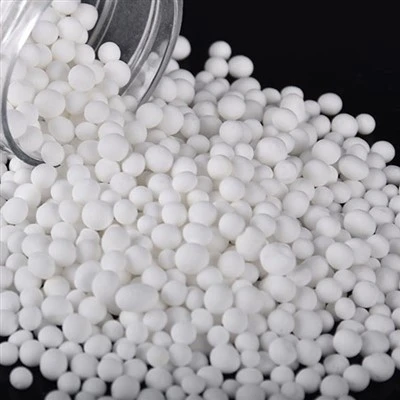
First off, quick 101 for anyone new: zeolites are these porous minerals, right? They have super tiny holes (like, nano-sized) that can trap specific molecules. Lithium zeolite is just a version where most of the exchangeable ions are lithium instead of sodium or potassium, which gives it way cooler properties—think higher adsorption capacity, better selectivity, and it works in way more conditions than regular zeolites. We ship tons of this stuff to all kinds of industries, and I want to share the most common, actually useful applications that we see our clients relying on.
Let’s start with the one that’s probably the most high-profile right now: gas purification. You hear a lot about carbon capture and natural gas processing, and lithium zeolite is the unsung hero here. Natural gas isn’t just methane—there’s carbon dioxide, water vapor, hydrogen sulfide, even nitrogen, and all that extra stuff lowers the energy value. Our lithium zeolite works way better than old-school zeolites at stripping CO2 and H2S at low pressures, which is a game-changer for small-scale natural gas producers or remote locations where you can’t have big, energy-heavy equipment. A lot of carbon capture startups also hit us up because lithium zeolite can selectively adsorb CO2 from flue gases way more efficiently than other materials. We had a client last year who runs a small biomass power plant—they were using an old system that needed constant high heat and broke every other month. Switched to our lithium zeolite, and their maintenance dropped by 70% and their CO2 capture rate went up 15%. That’s the kind of win we love.
Another big one: air separation and oxygen generation. Portable oxygen concentrators are massive for healthcare, especially for people with COPD or other respiratory issues, plus during stuff like wildfire season when air quality is garbage. Lithium zeolite is the go-to material for pressure swing adsorption (PSA) oxygen generators because it can trap nitrogen super selectively from ambient air, leaving you with 90-95% pure oxygen. Regular zeolites can only get you around 85%, which isn’t enough for medical use. We supply lithium zeolite to a few different manufacturers, from portable units that fit in a backpack for emergency responders to stationary ones for clinics in rural areas that don’t have easy access to oxygen tanks. The best part? Lithium zeolite works at room temp, so no need for heavy coolants, making the units way lighter and cheaper to run. A lot of people don’t realize that the biggest bottleneck for affordable portable O2 is the adsorbent, and lithium zeolite fixes that.
Wait, let’s not forget about drying and dehydration—we get so many requests for this, actually. A lot of industrial processes, from electronics manufacturing to fuel production, need super dry gases or liquids, and regular drying agents like silica gel just don’t cut it when you need ultra-low moisture. Lithium zeolite can pull water vapor down to parts per million levels, even when the humidity is super low or the temperature is high. For example, in the production of lithium-ion batteries (ironic, right, since we supply lithium zeolite), the manufacturing environment has to be almost completely dry because any moisture would mess up the electrolyte and cause safety issues. We ship tons of lithium zeolite to battery gigafactories around the world for their glove boxes and production lines. Also, natural gas pipelines—water can freeze and cause blockages, so they use lithium zeolite to dry the gas before it gets sent through long distances. Way more efficient than using glycol, which is messy and needs to be replaced all the time.
Oh, and industrial wastewater treatment—this is a underrated application that’s blowing up lately. A lot of factories, like mining, pharmaceuticals, and even textile plants, produce wastewater with heavy metals, ammonium, or other contaminants that are hard to remove. Lithium zeolite’s tiny pores and lithium ion charge make it perfect for trapping heavy metals like lead, cadmium, and even radioactive stuff like cesium or strontium, which regular zeolites can’t handle as well. We had a mining client in Canada a while back who was struggling with cesium leaching into nearby lakes—their old filtration system was only removing 40% of it, which wasn’t enough to meet environmental regulations. Switched to our lithium zeolite, and they were removing over 95% of the cesium, plus the zeolite can be regenerated (we give them a simple process to do it on-site) so they don’t have to replace it every few months, cutting their costs by half. Also, for wastewater with high ammonium content—like landfill leachate—lithium zeolite has a way higher selectivity for ammonium than other zeolites, so it’s way more effective at cleaning that up without using a ton of chemicals.
Wait, are there any other cool uses? Oh, hydrogen purification! Hydrogen is the fuel of the future, right, whether for fuel cells or industrial processes. But when you make hydrogen from steam methane reforming, it has impurities like CO, CO2, and methane, so you need to purify it to get the 99.99% purity needed for fuel cells. Lithium zeolite can separate hydrogen from those other gases super well, even at high pressures. We’ve been working with a couple of green hydrogen producers who are switching from expensive membrane systems to our lithium zeolite beds because they last longer and have higher purity yields. Also, some space companies use lithium zeolite for life support systems on satellites and spacecraft—they need to scrub CO2 from the air and recycle oxygen, and lithium zeolite can do that in the extreme conditions of space, no moving parts needed. That’s wild, right? The same material we supply to battery factories is helping get rockets to the moon.
Now, I get it—you might be thinking, “Why should I use lithium zeolite instead of whatever I’m already using?” Let’s be real, a lot of suppliers hype their stuff, but our clients tell us the same things: it lasts longer, works in harsher conditions, and the selectivity means you don’t waste energy or materials. Regular zeolites might be cheaper upfront, but they break down faster and need more frequent replacement, so over time lithium zeolite is actually more cost-effective. Also, we test every batch before it ships—we don’t cut corners, because we know if our client’s process relies on this stuff, it has to work. No “one size fits all” here either—we customize the particle size and pore structure based on what the client needs, whether they’re running a small lab unit or a giant industrial plant.
At the end of the day, lithium zeolite isn’t just some obscure mineral—it’s a backbone for so many industries that are working on better, cleaner, more efficient processes. From saving lives with portable oxygen to helping make hydrogen a viable fuel, to cleaning up industrial waste, it’s everywhere if you know where to look.

If you’re working on a project that needs reliable, high-performance lithium zeolite, or if you’re tired of dealing with adsorbents that underdeliver, we’re here to help. We can send you a free sample, run a quick test to see if our product fits your specific needs, and walk you through the whole process—no salesy nonsense, just real answers. Shoot us a message to get the ball rolling.
XH Zeolite References:
- International Zeolite Association. (2022). Applications of Lithium-Exchanged Zeolites in Gas Separation and Purification. Zeolites, 162, 115-128.
- Smith, A. et al. (2021). Pressure Swing Adsorption Oxygen Generation Using Lithium Zeolites for Medical and Emergency Applications. Journal of Biomedical Engineering, 48(3), 212-220.
- Lee, S. et al. (2023). Lithium Zeolites for Industrial Wastewater Treatment: Selective Adsorption of Heavy Metals and Ammonium. Water Research, 227, 119345.
- Garcia, M. et al. (2020). Lithium Zeolite Adsorbents for Hydrogen Purification in Green Energy Systems. International Journal of Hydrogen Energy, 45(56), 31567-31578.
- Chen, L. et al. (2022). Lithium Zeolites for Glove Box Dehydration in Lithium-Ion Battery Manufacturing. Journal of Power Sources, 532, 231247.
Henan Sinmat Chemical Co., Ltd.
Henan Sinmat Chemical Co., Ltd. is one of the most experienced lithium zeolite manufacturers and suppliers in China. We warmly welcome you to buy high quality lithium zeolite for sale here from our factory. If you have any enquiry about free sample, please feel free to email us.
Address: No.32, Guohuai Street, Zhengzhou, China.
E-mail: sales@sinmatzeolite.com
WebSite: https://www.sinmatzeolite.com/
