If you’ve ever worked with electronics—whether you’re a hobbyist soldering a new DIY project, an engineer designing a medical device, or a procurement manager sourcing PCBs for mass production—you’ve probably heard the term “FR4” thrown around. It’s the go-to material for 90% of the PCBs out there, right? But stop for a second: when you break down what makes FR4 tick, one part stands out way more than most people realize. No, it’s not the copper traces, the solder mask, or the silkscreen. It’s the resin. As someone who’s been supplying FR4 PCBs for over a decade, I can’t tell you how many times customers walk in asking for “high-quality FR4 boards” without having a clue that the resin is the unsung hero holding the whole thing together. Let’s cut through the jargon, break down what resin actually does in FR4, and why it’s not just a random “filler” in the PCB material stack. FR4 PCB

First, let’s get the basics out of the way: what even is FR4? If you’re nodding along, skip this part, but for anyone new to the game, FR4 stands for Flame Retardant 4, a grade of fiberglass-reinforced epoxy composite. Think of it as a layered sandwich, where the bread is thin sheets of woven fiberglass (the woven glass fabric) and the filling is resin. That’s the core structure. But here’s the thing: without the right resin, that fiberglass is just a pile of brittle, dusty fibers that can’t do anything useful for a PCB. I’ve seen cheap knockoff FR4 boards in my time—ones that feel flimsy, bend way too easily, or even peel apart at the edges when you try to drill a hole. 9 times out of 10, those issues trace back to cheap, low-grade resin that doesn’t bond properly to the fiberglass or can’t handle the heat and stress a PCB needs to.
Let’s start with resin’s number one job: adhesive, or as we call it in the industry, the “matrix.” The woven fiberglass gives FR4 its physical structure, but the resin is what glues all those glass layers into a solid, rigid board. When we manufacture FR4 prepregs (the half-finished layers that go into the PCB press), we coat the fiberglass fabric with a liquid epoxy resin, then let it partially cure (that’s the “B-stage” for you PCB folks). When it’s time to make the final board, we stack prepregs with copper foil on top, heat them in a hydraulic press, and the resin fully cures—cross-linking into a hard, thermoset plastic that locks all the layers together. This bond is non-negotiable. If the resin is old, contaminated, or has the wrong curing agent, that cross-linking doesn’t happen right. The result? Delamination—layers of the PCB peeling apart, which is a death sentence for any electronic component on the board. I had a customer a few years back who ordered a low-volume run of PCBs for a smart thermostat, and half the boards failed right after assembly because the supplier had used resin that was only 50% solids, leading to weak inter-layer bonds. We fixed that for him, and he’s been a repeat customer ever since.
Next up: thermal stability. Resin isn’t just glue—it’s what lets FR4 handle the heat that PCBs generate. Every time a component draws current, it dissipates heat, and if that heat builds up, it can warp the board, damage components, or even cause a fire. That’s where the flame retardant properties of FR4 come in, and 90% of that flame retardancy comes from the resin, not the fiberglass. I’ve tested a lot of resin formulations over the years, and the difference between a good epoxy resin and a bad one is night and day when it comes to heat resistance. A high-grade brominated epoxy resin (the standard for FR4) has a high glass transition temperature (Tg)—that’s the temperature where the resin stops being hard and rigid and starts softening. Most commercial FR4 has a Tg of around 130°C, but top-tier stuff we use goes up to 150°C or even 180°C for high-power applications. If your resin has a low Tg, even moderate heat from a power supply can make the board bend out of shape, which misaligns components and breaks solder joints. I remember working with an aerospace client a few years back who needed PCBs for a satellite’s sensor array—they specifically required resin with a 170°C Tg, because the satellite would experience extreme temperature swings in orbit. That’s not something you get with cheap resin.
Then there’s electrical insulation. Let’s be real: PCBs are all about routing electrical signals, and the board itself can’t conduct electricity. That’s another huge role of resin. The fiberglass is fine, but it’s the cured epoxy resin that fills in all the gaps between the woven glass fibers, creating a uniform, non-conductive layer between the copper traces, the layers, and the outside environment. If the resin is porous or has impurities like moisture or leftover solvents from manufacturing, it becomes a problem. Moisture trapped in the resin can cause arcing between traces, especially in high-voltage applications like power inverters or EV chargers. I once had a client in the industrial automation space who was having issues with PCBs shorting out in high-humidity factories. Turns out, the other supplier was using resin that didn’t fully cure, so it absorbed too much moisture. We switched them to a water-resistant, cured epoxy resin, and the shorting issues went away completely. That’s the kind of detail that makes a good supplier vs. a bad one—you can’t cut corners on resin if you want reliable electrical performance.
Wait, let’s not forget mechanical strength. People think fiberglass gives FR4 its toughness, but I’d argue resin plays a big part here too. The cross-linked epoxy resin is what distributes stress across the board. If you drop a PCB on a hard surface, it’s the resin that absorbs the impact, preventing cracks in the fiberglass or breaks in the copper traces. Cheap resin is brittle, so it cracks easily, leading to board failure. Our top-tier FR4 uses a modified epoxy resin that has better impact resistance, which is why we’re the go-to for customers making rugged handheld electronics, like walkie-talkies or industrial test equipment. We test every batch of resin ourselves—bending tests, drop tests, thermal cycling—before it even touches a fiberglass layer, because if the resin fails, the board fails, and that’s on us.
Now, let’s talk about the myths I hear all the time. A lot of customers ask if they can just use any epoxy resin for their FR4 boards, or if fiberglass is the only thing that matters. No way. Resin formulation is super specific. There are different types of epoxy resins: bisphenol A, bisphenol F, novolac epoxies—each has different properties. For example, novolac epoxies have higher Tg, so they’re great for high-power, high-temperature apps. Bisphenol A is more flexible, so it’s good for flexible PCBs? Wait, no, FR4 is rigid, but some modified bisphenol A resins have better adhesion to copper. Also, there’s the flame retardant aspect: traditional FR4 uses brominated epoxy resins, but more and more customers are asking for halogen-free resin now, because of environmental regulations. We’ve invested a lot in switching to halogen-free epoxy formulations over the last 5 years, and let me tell you, the quality has come a long way—you won’t even notice a difference in performance compared to brominated resins, which is why we can serve both traditional and eco-conscious clients.
Another myth: all FR4 resin is the same, so you should just go for the cheapest. I get it, cost is a big factor, especially for high-volume orders. But here’s the thing: cutting corners on resin ends up costing you more in the long run. We had a big electronics manufacturer come to us a couple years ago who’d been using a super cheap FR4 supplier. Their defect rate was 8%—which is unheard of for PCBs—because the resin they were using had poor adhesion, leading to delamination. They switched to our FR4, and their defect rate dropped to 0.5%. Even though our price was 15% higher, their total production cost went down because they didn’t have to rework boards or replace products in the field. That’s the value of good resin. It’s not an expense—it’s an investment in reliability.
So, what should you look for when you’re choosing an FR4 PCB supplier, beyond just “FR4”? Ask about the resin. Don’t be afraid to press them: what’s the Tg of the resin? Is it halogen-free if you need it? What’s the solids content of the prepreg resin? Are you using a cured epoxy that’s tested for thermal stability and insulation? A good supplier will have answers to all those questions, because they know resin isn’t a afterthought—it’s the foundation of the board.
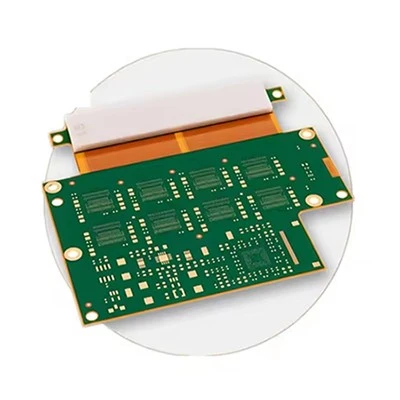
At the end of the day, the role of resin in FR4 PCBs is way more than just “the stuff holding it together.” It’s the adhesive that bonds layers, the thermal buffer that protects components from heat, the insulator that prevents electrical shorts, and the mechanical backbone that makes the board tough enough to handle production, assembly, and field use. As a FR4 PCB supplier, I’ve seen first-hand how a good resin can make a great product, and a bad resin can sink a project. If you’re tired of dealing with PCB suppliers who cut corners on materials, or if you have a project that needs high-quality, reliable FR4 boards—whether it’s for consumer electronics, industrial gear, aerospace, or anything in between—we can help you pick the right resin and the right board specs to fit your needs. Hit us up to talk through your project, no pressure, no vague quotes—just straight talk about what will work best for you.
Flexible PCB References
- John S. Dally, "Mechanics of Materials in Electronic Packaging", McGraw-Hill, 2007
- IPC-4101, "Specification for Base Materials for Printed Boards", Association Connecting Electronics Industries, 2020
- T. K. Ross, "Epoxy Resins for Electronic Applications", Wiley-Scrivener, 2018
- Electra Scientific, "Thermal Properties of Epoxy Resins for PCB Materials", 2021 Technical Report
Fastline Circuits Co., Limited
Fastline Circuits Co., Limited is one of the most professional FR4 PCB manufacturers and suppliers in China. With abundant experience, we warmly welcome you to wholesale durable FR4 PCB made in China here and get quotation from our factory. All customized products are with high quality and competitive price.
Address: Room 301, Building B3, Fuqiao 4th District, Qiaotou Community, Fuhai Subdistrict, Bao’an District, Shenzhen, Guangdong Province, China
E-mail: sales@fastlinepcb.com
WebSite: https://www.fastlinepcb.net/
